
Running with Achilles tendonitis means managing training load, footwear choice, and tendon stress while dealing with irritation around the back of the heel or lower calf. It matters because the Achilles tendon responds strongly to repeated impact, hill climbing, speedwork, and sudden shoe changes. For runners, the goal is not only to find a softer shoe but to reduce avoidable strain while keeping movement controlled, gradual, and recovery-focused.
This article explains how to use shoe rotation, training adjustments, recovery footwear, and smarter daily habits when running with Achilles tendonitis. It covers when different shoe types make sense, which footwear mistakes can worsen symptoms, and how to approach running more carefully while the tendon is sensitive.
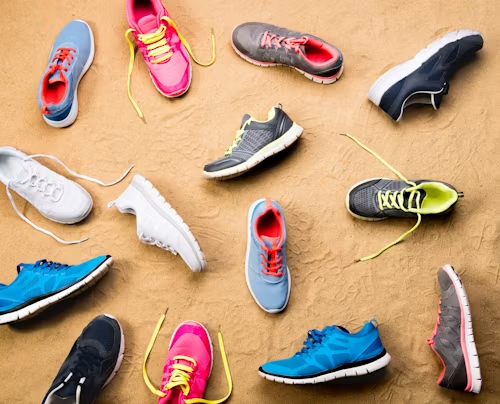
Running With Achilles Tendonitis Requires More Than A Softer Shoe
Many runners immediately look for the most cushioned shoe when Achilles pain appears. Cushioning can help, but it is only one part of the picture. Achilles tendonitis is often linked to training load, sudden mileage increases, hill work, speed sessions, calf tightness, and inadequate recovery. A shoe may reduce impact, but it cannot fully compensate for a training plan that keeps overloading the tendon.
The tendon usually dislikes abrupt changes. Switching from a high-drop shoe to a low-drop shoe, increasing long-run distance too quickly, or adding fast workouts during a painful period can all increase strain. Even a high-quality shoe can feel wrong if it changes mechanics too suddenly.
A better approach is to pair supportive footwear with lower-intensity running, flatter routes, gradual mileage, and careful symptom tracking. If pain worsens during a run or stiffness increases the next morning, the training load may still be too aggressive.
Building A Shoe Rotation Around Achilles Tendonitis
A shoe rotation can help runners manage different types of training more intelligently. Instead of using one shoe for every run, the runner can choose footwear based on intensity, distance, terrain, and recovery status.
For everyday mileage, a stable daily trainer is often the safest foundation. It should provide enough cushioning for impact protection, enough structure to avoid excessive heel movement, and a comfortable collar that does not press into the Achilles.
On low-intensity days, many runners benefit from best running shoes for recovery runs and achilles tendonitis because these pairs usually emphasize comfort, protection, and controlled movement over fast turnover. Recovery shoes should not feel unstable or overly soft through the heel, especially when the tendon is already irritated.
Speed shoes require more caution. Fast sessions place more demand on the calf-Achilles complex, so best running shoes for speed training and achilles tendonitis should be approached carefully rather than chosen only for lightweight responsiveness. A very flexible, low-drop, or aggressive racing-style shoe may increase strain if the tendon is not ready.
| Running Scenario | Better Shoe Choice | Main Priority |
| Easy daily miles | Stable cushioned trainer | Controlled comfort |
| Recovery runs | Protective, smooth trainer | Reduced irritation |
| Long runs | Durable cushioned shoe | Support over distance |
| Speed sessions | Stable lightweight shoe | Responsiveness with caution |
| Walking days | Supportive walking shoe | Daily tendon relief |
Matching Footwear To Different Running Scenarios
Different runs place different demands on the Achilles. Long runs expose small fit issues, firmness problems, and stability weaknesses because the tendon is loaded repeatedly over time. Longer mileage usually exposes small shoe weaknesses, so best running shoes for long runs with achilles tendonitis tend to prioritize stable cushioning, smooth transitions, and less aggressive heel irritation.
Easy runs usually need comfort and predictability. The shoe should help the runner settle into a relaxed stride without forcing extra calf engagement. A moderate heel drop, secure heel fit, and steady platform can make easy mileage feel less demanding.
Daily footwear also matters. Work shoes, walking shoes, recovery sandals, and supportive sneakers all affect daily tendon loading, which makes running shoes for achilles tendonitis vs other footwear alternatives relevant beyond the miles logged during workouts. A runner may choose good running shoes for training but still aggravate the tendon by spending the rest of the day in unsupportive flat shoes.
Footwear outside running should be comfortable, stable, and appropriate for the amount of walking or standing required. Recovery does not happen only during workouts; it is influenced by the full day of movement.
Common Shoe Problems That Can Trigger Achilles Irritation
Shoe problems often appear gradually. A runner may notice slight rubbing, mild heel slip, or extra calf fatigue at first, then more obvious Achilles soreness after several runs. These issues should not be ignored.
Heel slip, stiff collars, unstable midsoles, and abrupt low-drop transitions are common problems of running shoes for achilles tendonitis and their solutions often start with better fit, slower adaptation, and more appropriate shoe rotation.
Common problems include:
- Heel slippage: Creates repeated friction and unstable rearfoot movement.
- Stiff heel collar: Can press directly into the irritated tendon area.
- Very low heel drop: May increase Achilles loading if introduced too quickly.
- Overly soft midsole: Can feel unstable if the heel sinks unevenly.
- Poor lockdown: Forces the foot to work harder inside the shoe.
- Worn-out cushioning: Reduces protection and may change stride mechanics.
A shoe should feel secure, smooth, and predictable. If a pair repeatedly causes soreness in the same area, it may not be a good recovery-friendly option.
Practical Recovery-Friendly Running Adjustments
Running with Achilles tendonitis requires honest pacing. Many runners make symptoms worse by returning to normal mileage too quickly once the pain feels slightly better. The tendon may feel acceptable during a run but react later with stiffness or soreness.
Useful adjustments include reducing hill work, avoiding aggressive sprinting, shortening stride length, and keeping runs easy while symptoms calm down. Runners may also benefit from flatter routes, softer but stable surfaces, and more rest between demanding sessions.
A simple recovery-focused approach may look like this:
- Keep runs short and easy during irritated phases.
- Avoid back-to-back hard days.
- Replace some runs with walking or low-impact cardio.
- Stop if pain changes stride mechanics.
- Monitor morning stiffness as a warning sign.
- Return to speedwork only after easy runs feel consistently comfortable.
If pain is sharp, swelling appears, or symptoms keep returning, professional assessment is important.
Footwear can support the process, but it should not be used to mask worsening tendon pain.
Knowing when to rotate shoes, reduce training intensity, or stop running can help keep footwear decisions aligned with recovery.
FAQs About running with Achilles tendonitis
These common questions address shoe rotation, recovery runs, speed training, everyday footwear, and warning signs that may require a break from running.
Should I rotate shoes with Achilles tendonitis?
Yes, shoe rotation can help if each pair has a clear purpose. A stable trainer, recovery shoe, and walking option may reduce repeated stress from relying on one unsuitable pair.
Are recovery runs safe with Achilles tendonitis?
Recovery runs may be safe when pain is mild, controlled, and not worsening. They should stay slow, short, flat, and comfortable. Increased next-day stiffness is a warning sign.
Can speed training make Achilles tendonitis worse?
Yes, speed training can increase calf and Achilles demand. Fast workouts, spikes, low-drop shoes, and aggressive toe-off should be avoided until the tendon tolerates easy running well.
Are walking shoes important for Achilles tendonitis?
Yes, walking shoes matter because daily steps also load the tendon. Supportive footwear outside running can reduce extra irritation during workdays, errands, and recovery periods.
When should I stop running with Achilles tendonitis?
Stop running if pain becomes sharp, changes your stride, worsens during the run, or causes increased stiffness the next morning. Persistent symptoms should be assessed professionally.
These answers reinforce the importance of matching footwear and training load to how the Achilles responds during recovery.
Final Verdict
Running with Achilles tendonitis requires a practical balance between supportive shoes, controlled training, and realistic recovery habits. A thoughtful shoe rotation can help match footwear to easy runs, long runs, recovery days, walking, and cautious speedwork. The safest approach is to reduce sudden load changes, avoid irritating shoe designs, and let symptoms guide how quickly running intensity returns.