
Dental floss for tight teeth refers to floss designed or used specifically for teeth with very close contact points, where standard floss may snap, shred, or feel difficult to move between teeth. This matters because tight spacing can make daily flossing feel uncomfortable, even when the person is trying to maintain healthy gums, remove plaque, and clean areas a toothbrush cannot reach. When floss does not glide properly, people often press harder, skip the habit, or irritate the gumline.
This article explains why tight teeth make flossing more difficult, how to floss gently, what mistakes cause pain or shredding, and when a different floss type may help. It also gives practical technique guidance for beginners, sensitive gums, and people who struggle with floss getting stuck.
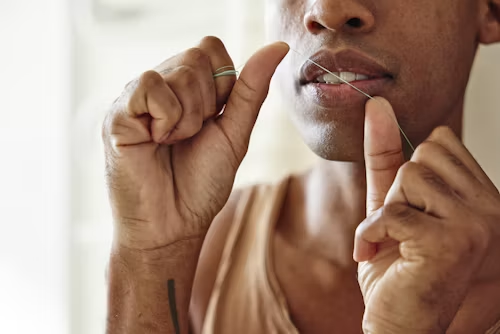
Why Tight Teeth Make Flossing More Difficult?
Tight teeth create narrow contact points between neighboring teeth. These areas can be hard to enter with thicker or poorly coated floss, especially if there is crowding, older dental work, rough filling edges, or slight tooth rotation. The problem is not always the person’s technique. Sometimes the floss simply does not match the spacing.
A common mistake is pushing straight down with force. That can make floss snap through the contact and hit the gums sharply. Over time, this can cause soreness, bleeding, and frustration. Gum tenderness usually gets worse when floss is forced through tight contacts, which is why many people do better with best dental floss for sensitive gums and tight teeth that glides smoothly without cutting into the gumline.
What Causes Floss To Snap, Shred, Or Get Stuck?
Floss usually snaps or shreds because it is rubbing against a tight contact point, rough enamel edge, filling, crown margin, or small overlapping area. Unwaxed floss may grip too much, while very thick floss may struggle to pass through narrow spaces.
Common causes include:
- Using floss that is too thick for close contacts
- Pulling floss straight down instead of easing it through
- Reusing a frayed section of floss
- Catching floss on rough dental work
- Using quick, aggressive motions near the gums
If floss repeatedly tears in the same spot, the issue may be structural rather than technique-related. A dentist can check whether a filling edge, tartar buildup, or tight restoration is causing the floss to catch.
Why Sensitive Gums Need A Gentler Approach?
Sensitive gums are more likely to react to pressure, friction, and snapping motions. Bleeding does not always mean flossing should stop, especially if plaque has built up near the gumline, but pain is a sign that the technique needs to be softer.
The goal is controlled pressure, not force. Floss should slide between teeth, wrap around the side of each tooth, and move slightly below the gumline without cutting into tissue. When the floss feels sharp, rough, or difficult to control, switching texture or technique can make the habit easier to maintain.
How To Floss Tight Teeth Without Hurting Your Gums?
The safest method is to guide floss slowly through the contact point instead of forcing it downward. Hold the floss tightly between both hands, leaving only a short working section. Move it gently back and forth with a small sawing motion until it slips through.
Once the floss passes the contact, curve it around one tooth in a C shape. Move it up and down along the tooth surface, then repeat on the neighboring tooth before removing it. The main difference between waxed floss, dental tape, and expanding floss becomes clearer when comparing types of dental floss for tight teeth based on glide, thickness, and gum comfort.
The Right Way To Slide Floss Between Close Contacts
A good technique starts with control. Too much loose floss makes it harder to guide the movement, especially around back teeth. A short, firm section gives better precision.
Use this simple process:
- Break off enough floss to use a clean section between each space.
- Wrap it around your fingers and keep a short section tight.
- Ease the floss between teeth using a gentle side-to-side motion.
- Stop pressing once the floss passes the contact.
- Curve the floss around the tooth instead of pushing into the gums.
- Clean both sides of the space before moving on.
A gentle sawing motion helps the floss pass through close contacts, but setup, technique, and daily usage for dental floss for tight teeth still determine whether the habit feels sustainable.
Why A C-Shape Motion Cleans Better Than Snapping Floss Down?
Snapping floss down only passes through the contact point. It does not properly clean the tooth surface near the gumline. A C-shape motion is better because it allows the floss to hug the tooth and remove plaque where bacteria collect.
Think of flossing as wiping the side of the tooth, not cutting between the teeth. This small change makes flossing more comfortable and more effective. It also reduces the chance of gum trauma, especially for people with tight contacts and sensitive tissue.
Best Flossing Techniques For Beginners With Tight Teeth
Beginners often struggle because tight teeth make flossing feel harder than expected. The habit may feel slow at first, but speed should not be the goal. Consistency and comfort matter more.
Someone new to daily flossing may need best dental floss for tight teeth for beginners because easier handling often matters more than advanced plaque-removal claims at the start. A smooth waxed floss, dental tape, or easy-glide floss may help build the habit before moving to more specialized options.
How Often To Floss When Your Teeth Feel Too Close Together?
Most people benefit from flossing once daily. Nighttime is often easiest because it removes food particles and plaque before a long period of reduced saliva flow during sleep. However, the best time is the one a person can repeat consistently.
If gums bleed during the first few days, use lighter pressure and keep the routine gentle. Bleeding often improves as plaque is removed more consistently, but severe pain, swelling, or ongoing bleeding should be checked by a dental professional.
When To Switch From String Floss To Floss Picks Or Tape?
String floss gives better control around each tooth, but not everyone finds it easy to use. Floss picks can help with back teeth, travel, limited hand mobility, or quick cleaning after meals. Dental tape may feel smoother for people who dislike thin floss cutting into the gums.
Here is a simple comparison:
| Option | Best For | Possible Limitation |
| Waxed string floss | Tight contacts and daily control | Requires finger wrapping |
| Dental tape | Wider surface feel and gum comfort | May be too broad for some spaces |
| Floss picks | Convenience and back teeth access | Less flexible around each tooth |
| Expanding floss | Plaque removal after passing contact | May feel thick in very tight spaces |
The right choice is the option that fits between the teeth comfortably and encourages regular use.
Common Tight Teeth Flossing Problems And How To Fix Them
Tight teeth can create repeat problems even for people who floss carefully. The most common issues are shredding, stuck floss, bleeding gums, and difficulty reaching molars. These problems usually improve with better control, a smoother floss coating, or a different floss shape.
When floss keeps fraying or catching near rough dental work, common problems of dental floss for tight teeth & their solutions usually involve changing floss texture, angle, or technique rather than pressing harder.
Floss Gets Stuck Between Teeth
If floss gets stuck, do not yank it upward aggressively. That can irritate the gums or damage dental work. Instead, release one end of the floss and gently pull it through from the side. If it happens often in the same place, the contact may be too tight or rough.
Try switching to a thinner waxed floss or a shred-resistant tape. If the problem continues, ask a dentist to check the area for tartar, rough fillings, or crown edges.
Gums Bleed Or Feel Sore After Flossing
Mild bleeding can happen when plaque has irritated the gums or when flossing is new. However, flossing should not feel sharp or painful. Use less pressure, curve the floss around the tooth, and avoid snapping into the gumline.
If soreness continues, the floss may be too rough, the motion may be too aggressive, or gum inflammation may already be present. A dental checkup is important when bleeding is heavy, persistent, or paired with swelling.
If flossing still feels difficult despite using a smoother floss and gentler technique, a few common questions can help clarify what is normal and when the problem may need professional attention.
FAQs About flossing tight teeth without pain
These common questions address waxed floss, stuck floss, discomfort, floss picks, and how gums may respond when a consistent flossing routine begins.
Is waxed floss better for tight teeth?
Waxed floss is often better for tight teeth because the coating helps it slide through close contacts more smoothly. It may also reduce shredding compared with unwaxed floss.
Why does floss keep getting stuck between my teeth?
Floss may get stuck because of tight contacts, rough dental work, tartar buildup, or floss that is too thick. Repeated sticking in one area should be checked by a dentist.
Should floss hurt between tight teeth?
Floss should not hurt. Some pressure is normal, but sharp pain usually means the floss is being forced, snapped, or used with the wrong angle.
Are floss picks good for tight teeth?
Floss picks can work for tight teeth if the floss is thin and strong enough. They are convenient, but string floss usually provides better wrapping control around each tooth.
How long does it take for gums to adjust to flossing?
Gums may feel more comfortable after one to two weeks of gentle daily flossing. Persistent bleeding, swelling, or pain should be evaluated by a dental professional.
These answers reinforce the importance of gentle technique and appropriate floss selection before the main recommendations are summarized.
Final Verdict
Flossing tight teeth is easier when the focus shifts from force to control. A smooth, shred-resistant floss and gentle C-shape technique can reduce pain, gum irritation, and stuck floss. The best routine is one that cleans close contacts effectively while feeling comfortable enough to repeat every day.