Trail camera battery life refers to how long a camera can operate before requiring battery replacement or recharging. In remote locations, maximizing battery performance is essential because frequent site visits can be inconvenient, costly, and disruptive to wildlife activity.
This article explains why battery life matters, identifies the biggest sources of power consumption, and outlines practical strategies that help trail cameras remain operational for longer periods in the field.
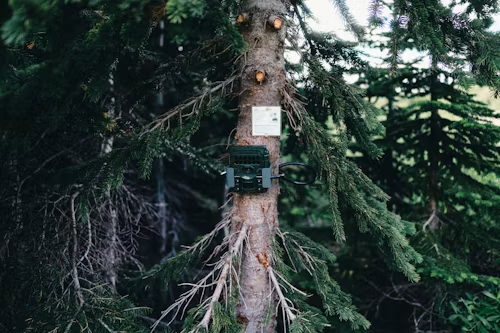
Why Battery Life Matters In Remote Deployments?
Battery performance affects far more than convenience. A camera that runs out of power may miss critical wildlife activity, security events, or property monitoring data.
Users comparing the best battery-efficient wifi trail camera options often focus on battery capacity while overlooking power-management settings that can have an equally significant impact on runtime.
Longer battery life provides several advantages:
- Fewer trips to replace batteries.
- Reduced disturbance to wildlife areas.
- Lower long-term operating costs.
- More consistent image collection.
- Improved monitoring reliability.
For hunters, researchers, and property owners, maintaining uninterrupted operation is often just as important as image quality.
Reliable runtime becomes even more valuable when cameras are deployed for extended periods.
Factors That Drain Trail Camera Batteries
Several settings and environmental conditions can rapidly increase power consumption.
Understanding these factors helps users make informed adjustments before deployment.
Photo Resolution And Video Recording
Higher-resolution photos require more processing power and storage activity. Video recording places even greater demands on the camera system.
Power consumption often increases when:
- Recording long video clips.
- Capturing high-resolution images.
- Taking frequent burst-photo sequences.
- Operating advanced image-processing features.
While these settings can improve image quality, they may significantly reduce battery life.
Balancing image requirements with operational goals often produces better long-term performance.
Wireless Transfer Frequency
Wireless communication is one of the most power-intensive functions in modern trail cameras.
Frequent image transfers require the camera to activate communication hardware repeatedly throughout the day.
Reducing unnecessary transmission frequency can noticeably improve runtime without sacrificing monitoring effectiveness.
Power-saving settings become especially important during long-term deployments.
Practical Ways To Increase Runtime
Improving battery life usually involves optimizing both camera settings and deployment strategy.
Reliable power management becomes especially important when selecting the best wifi trail camera for long-term field deployment in remote environments where maintenance access is limited.
Optimize Camera Settings
Several adjustments can reduce energy consumption:
- Shorten video recording duration.
- Reduce unnecessary burst-photo settings.
- Extend trigger intervals when appropriate.
- Lower transmission frequency.
- Use sleep modes whenever available.
Small configuration changes often provide meaningful improvements in overall battery performance.
Choose Strategic Placement
Location affects battery efficiency more than many users realize.
Positioning cameras where motion triggers occur naturally can reduce unnecessary image captures caused by wind-blown vegetation, moving branches, or changing shadows.
Thoughtful placement helps ensure power is used for meaningful activity rather than false triggers.
A well-positioned camera generally performs more efficiently than one relying solely on aggressive settings adjustments.
External Power Solutions
For extremely remote deployments, supplemental power sources may offer the most effective solution.
The table below compares common power options.
Many outdoor users explore external power systems when standard batteries cannot provide sufficient runtime.
| Power Source | Typical Runtime Benefit | Best Use Case |
| Alkaline Batteries | Moderate | Short-term deployments |
| Lithium Batteries | High | Cold weather and remote sites |
| Rechargeable Batteries | Moderate | Frequent maintenance access |
| Solar Panels | Very High | Long-term deployments |
| External Battery Packs | High | Extended monitoring projects |
Solar charging kits have become popular add-ons, integrations, and enhancements for wifi trail cameras operating far from accessible power sources.
Selecting the appropriate power source depends on climate conditions, maintenance schedules, and deployment objectives.
Supplemental power solutions work best when combined with proper maintenance practices.
Long-Term Maintenance Strategies
Battery longevity depends not only on the batteries themselves but also on ongoing equipment care.
Regular battery inspection remains one of the most important safety, maintenance, and best practices for wifi trail cameras during extended outdoor use.
Routine maintenance should include:
- Checking battery terminals for corrosion.
- Inspecting weather seals.
- Cleaning camera housings.
- Verifying wireless functionality.
- Reviewing battery voltage levels.
Preventive maintenance helps avoid unexpected failures and improves operational consistency.
Seasonal Considerations
Temperature has a major influence on battery performance.
Cold weather often reduces battery efficiency and available capacity, while excessive heat may accelerate battery degradation.
Cold-weather battery management can significantly influence the longevity & long-term value of wifi trail cameras used repeatedly across multiple seasons.
Lithium batteries typically perform better than alkaline alternatives in colder climates.
Understanding seasonal effects allows users to plan deployments more effectively throughout the year.
Monitoring Equipment Health
Battery performance should be evaluated alongside overall camera health.
Signs that may indicate potential issues include:
- Unexpected battery drain.
- Inconsistent image transmission.
- Frequent camera restarts.
- Reduced trigger responsiveness.
- Declining wireless connectivity.
Addressing these issues early often prevents larger problems later.
Regular monitoring ensures both the power system and camera remain dependable over extended deployments.
Combining efficient camera settings, suitable batteries, external power options, and preventive maintenance creates a more dependable system for extended remote monitoring.
FAQs About Extending Trail Camera Battery Life
Extending trail camera runtime often raises questions about battery types, wireless power consumption, solar charging, inspection schedules, and seasonal conditions. These answers address the most common battery-management concerns for remote deployments.
What type of batteries last longest in trail cameras?
Lithium batteries generally provide the longest runtime, especially in cold-weather environments and remote deployments.
Does WiFi reduce trail camera battery life?
Yes. Wireless communication requires additional power, particularly when images are transmitted frequently.
Are solar panels worth using with trail cameras?
Yes. Solar panels can significantly extend operational time and reduce battery replacement frequency.
How often should trail camera batteries be checked?
Inspection frequency depends on usage, but periodic checks help identify declining performance before failures occur.
Does cold weather affect battery life?
Yes. Low temperatures can reduce battery efficiency and shorten operational runtime.
These answers clarify the primary factors affecting trail camera power consumption and help users plan more reliable, efficient, and cost-effective remote deployments.
Final Verdict
Extending trail camera battery life requires a combination of smart settings, proper placement, routine maintenance, and appropriate power solutions. By reducing unnecessary power consumption and planning deployments carefully, users can significantly improve runtime, reduce field visits, and maintain more reliable monitoring in remote locations.