Resistance band leggings vs regular workout leggings is a comparison between activewear that adds training resistance and activewear designed mainly for comfort, compression, and flexibility. Resistance band leggings use built-in tension zones to make certain lower-body movements more challenging, while regular workout leggings focus on stretch, coverage, sweat control, and unrestricted movement.
This article explains how both options perform during strength training, cardio, HIIT, stretching, and everyday workouts. You will learn where resistance band leggings offer real value, where regular leggings still make more sense, and how to choose the better option based on your training style, comfort needs, and long-term budget.
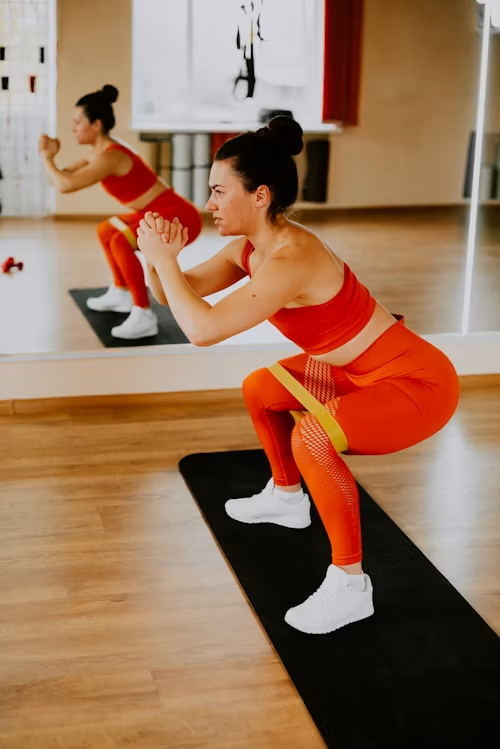
Resistance Band Leggings vs Regular Workout Leggings: Main Difference
The main difference is function. Regular workout leggings are primarily clothing. They support movement, improve comfort, and provide compression, but they do not intentionally add resistance to the workout.
Resistance band leggings are more like a hybrid between activewear and training equipment. They are designed to create tension when the legs move apart, extend, bend, or stabilize through certain exercises.
The biggest difference in resistance band leggings vs traditional workout leggings is that one adds training resistance while the other mainly supports comfort, coverage, and flexibility. That distinction matters because the better choice depends on whether the user wants performance assistance or simple activewear comfort.
How Built-In Resistance Affects Movement?
Built-in resistance can make glute bridges, squats, kickbacks, lateral walks, and controlled lower-body movements feel more active. The leggings encourage the hips, glutes, and thighs to work against tension.
This can be helpful for users who want more engagement during bodyweight workouts. However, resistance can also feel restrictive if the leggings are too tight, too heavy, or poorly matched to the workout.
How Traditional Workout Leggings Prioritize Flexibility?
Regular workout leggings usually offer better freedom of movement. They are often more comfortable for yoga, stretching, walking, treadmill workouts, cycling, and long casual wear.
They may not increase workout difficulty, but they can still improve performance by staying in place, managing sweat, and allowing the body to move naturally.
Which Leggings Work Better For Strength Training?
Resistance band leggings are often more useful for lower-body strength training than regular leggings. They can add light resistance during bodyweight exercises and help users feel stronger muscle engagement during warmups or accessory work.
Lifters who want extra lower-body engagement may prefer best resistance band leggings for strength training because controlled resistance can make squats, lunges, and hip hinges feel more intentional. This does not replace weights, but it can support better control and activation.
| Training Goal | Better Option | Why |
| Glute activation | Resistance band leggings | Adds tension during hip movement |
| Heavy lifting | Regular leggings or light-resistance leggings | Less restriction under load |
| Home strength workouts | Resistance band leggings | Adds challenge without extra gear |
| Mobility-based strength | Regular workout leggings | Allows freer movement |
| Warmup sets | Resistance band leggings | Helps activate glutes and hips |
Resistance, Muscle Engagement, And Lower-Body Control
Resistance band leggings can help users stay more aware of knee tracking and hip stability. During squats or lateral walks, the resistance may encourage the user to press outward and maintain alignment.
This can be helpful for beginners, home fitness users, and anyone doing glute-focused accessory work. Still, form matters more than resistance. If the leggings cause awkward movement, they are not improving the workout.
When Regular Leggings Are Still The Better Choice?
Regular leggings are better for heavy barbell training, deep stretching, or exercises requiring maximum range of motion. They are also usually better for users who dislike added tension or feel distracted by compression.
For serious strength sessions, some users may prefer regular leggings during main lifts and resistance band leggings during warmups or finishing exercises.
Which Leggings Work Better For Cardio And HIIT?
Cardio and HIIT require a different balance. Movement speed, breathability, sweat control, and stride freedom become more important than added resistance. In these workouts, too much resistance may reduce comfort and performance.
For faster sessions, best resistance band leggings for cardio workouts should balance light resistance with breathable fabric so movement does not feel restricted. A pair that works well for glute bridges may not automatically work well for burpees, mountain climbers, or treadmill intervals.
Breathability, Mobility, And Sweat Management
Regular workout leggings usually perform better for long cardio because they tend to be lighter and more breathable. They also allow easier stride length during running, cycling, or dance-based workouts.
Resistance band leggings can still work for low-impact cardio, walking workouts, and controlled HIIT circuits. The key is choosing a design that does not trap heat or pull against every step.
Why Too Much Resistance Can Affect Speed?
Excess resistance may slow transitions during fast workouts. It can also make movements feel less natural, especially when exercises involve quick changes in direction.
For HIIT, resistance band leggings should feel supportive but not restrictive. If they cause the user to shorten steps, lose rhythm, or compensate through the lower back, regular leggings are the safer choice.
Comfort, Fit, And Fabric Performance Compared
Comfort depends on fabric quality, waistband design, compression level, stretch recovery, and seam placement. Regular workout leggings often win for all-day wear because they are simpler, lighter, and easier to move in.
Resistance band leggings need more structure, so they may feel firmer. That can be helpful during training but less comfortable for lounging or long errands.
Compression, stretch recovery, seam placement, and waistband support are the practical details that make key features of resistance band leggings more important than style alone. The design has to manage both activewear comfort and resistance performance at the same time.
Waistband Stability And Compression Feel
A stable waistband matters in both styles. If leggings roll down, slide, or bunch, they interrupt movement and reduce confidence.
Resistance band leggings may need a stronger waistband because the built-in tension can pull against the body during exercise. Regular leggings can feel softer, but they still need enough compression to stay secure.
Stretch Recovery, Seams, And Durability
Stretch recovery is especially important in resistance band leggings. If the fabric loses shape, the resistance effect may weaken and the leggings may stop fitting properly.
Seams should feel smooth and reinforced. Poor stitching can cause discomfort during squats, lunges, or lateral movements. Regular leggings also need durability, but they do not face the same tension demands as resistance designs.
Value Comparison: Are Resistance Band Leggings Worth It?
Resistance band leggings can be worth it for users who regularly do glute activation, home workouts, lower-body training, and bodyweight strength routines. They offer the convenience of built-in resistance without needing a separate loop band.
A higher price can make sense when longevity & long-term value of resistance band leggings comes from durable resistance zones, strong stitching, and fabric that keeps its shape. Cheap options may lose tension quickly or feel uncomfortable after repeated use.
| User Type | Better Choice | Reason |
| Home workout user | Resistance band leggings | Adds challenge without extra equipment |
| Runner | Regular workout leggings | Better stride freedom |
| Strength beginner | Resistance band leggings | Helps with activation and control |
| Yoga user | Regular workout leggings | Allows deeper mobility |
| Glute-focused user | Resistance band leggings | Supports targeted lower-body work |
| Everyday wearer | Regular workout leggings | More comfortable for long wear |
Cost Per Use And Training Versatility
Regular leggings usually offer more everyday versatility. They work for gym sessions, errands, walks, lounging, travel, and stretching. This makes cost per use lower for people who want one pair for many activities.
Resistance band leggings offer better value when they are used consistently for training. If they only sit in the drawer because they feel too restrictive, they are not a good investment.
Who Gets The Most Long-Term Benefit?
The users who benefit most are those who train lower body often, prefer home workouts, or want extra glute engagement without carrying separate bands. They are also useful for people who like structured activewear with a supportive feel.
Regular leggings are better for users who prioritize comfort, flexibility, running, yoga, or general gym wear. They may not add resistance, but they remain more practical for a wider range of daily movement.
The comparison also raises a few practical questions about where each type of leggings fits best across different workouts and budgets.
FAQs About resistance band leggings vs regular workout leggings
These common questions clarify how resistance band leggings compare with regular workout leggings for training, cardio, comfort, and overall value.
Are resistance band leggings better than regular leggings?
Resistance band leggings are better for glute activation and controlled lower-body workouts. Regular leggings are better for flexibility, running, yoga, lounging, and workouts that require unrestricted movement.
Can you wear resistance band leggings for cardio?
Yes, but they work best for low-impact cardio or controlled HIIT. For running, cycling, or fast footwork, regular leggings usually feel lighter and less restrictive.
Do resistance band leggings replace resistance bands?
They can replace light loop bands for some exercises, but not all resistance training. Separate bands still offer more resistance variety and can be used for upper-body or rehab movements.
Are regular workout leggings better for beginners?
Regular leggings may be better for complete beginners who want comfort first. Resistance band leggings can also work if the resistance is light and the fit does not restrict natural movement.
Are resistance band leggings worth the extra cost?
They are worth it for users who consistently do glute workouts, home strength training, or lower-body activation. For casual wear or general cardio, regular workout leggings may offer better value.
These answers make it easier to weigh the practical differences before deciding which type of leggings better matches the intended workouts and everyday use.
Final Verdict
Resistance band leggings are better for users who want added lower-body resistance, glute activation, and more challenge during controlled strength movements. Regular workout leggings are better for comfort, mobility, cardio, yoga, and everyday wear.
The better choice depends on how the leggings will actually be used. For targeted home training and glute-focused routines, resistance band leggings can be worthwhile. For all-purpose activewear, regular workout leggings remain the more flexible option.