Best primer for cabinets refers to a bonding and stain-blocking base coat designed to help paint adhere smoothly to cabinet surfaces while improving durability and finish quality. Choosing the right cabinet primer is essential for preventing peeling, bleed-through, uneven coverage, and premature wear on kitchen or bathroom cabinets.
A high-quality primer for cabinets can improve paint performance, reduce maintenance, and create a more professional-looking result. This guide compares top-rated options, explains key features, and helps you select the right cabinet primer based on material, finish, and project needs.
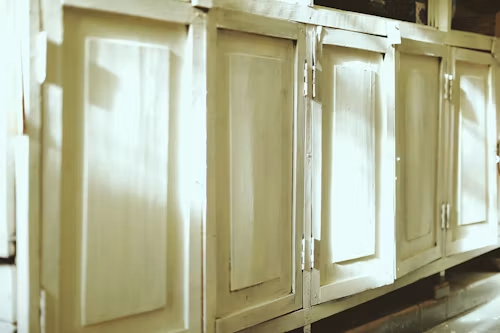
Best Primer For Cabinets Key Takeaways
Choosing the right cabinet primer has a direct impact on paint adhesion, stain resistance, finish smoothness, and long-term durability. Different cabinet materials and existing finishes require different primer formulations for reliable results.
- Best Overall: Zinsser BIN Shellac-Based Primer delivers exceptional adhesion and stain blocking for most cabinet projects.
- Best Budget: KILZ 2 All-Purpose Primer offers dependable performance at a lower cost for standard cabinet refinishing.
- Best Premium: INSL-X STIX Waterborne Bonding Primer excels on glossy and hard-to-paint cabinet surfaces.
- Best Stain Blocking: Rust-Oleum Zinsser Cover Stain effectively seals tannins, smoke marks, and grease stains.
- Best Low-Odor Option: Benjamin Moore Fresh Start delivers strong adhesion with easier indoor application.
- Best For Laminate Cabinets: INSL-X STIX provides excellent grip on slick laminate and melamine finishes.
The right primer depends on cabinet material, existing coating condition, and the type of paint system being used afterward.
The Best Primer For Cabinets
Cabinet primers are evaluated based on adhesion strength, stain-blocking ability, sanding performance, drying time, finish compatibility, and long-term paint durability. Special attention is given to how each primer performs on common cabinet materials such as wood, MDF, laminate, and previously painted surfaces.
This comparison also considers real-world application factors including odor levels, cleanup difficulty, coverage consistency, and compatibility with oil-based or water-based cabinet paints. User feedback, professional painter preferences, and manufacturer specifications all help determine which primers perform most reliably in kitchen and bathroom cabinet projects.
Best Primer For Cabinets Quick Picks
Cabinet primers vary significantly in adhesion strength, stain blocking, odor levels, and compatibility with different cabinet materials. Some perform better on raw wood, while others are designed specifically for glossy laminate or heavily stained surfaces that need aggressive sealing performance.
The options below highlight the strongest performers across different cabinet refinishing priorities, making it easier to narrow down the right primer before starting a painting project.
| Category | Option | Why It’s Best |
| Best Overall | Zinsser BIN Shellac-Based Primer | Exceptional adhesion and stain blocking on nearly all cabinet surfaces |
| Best Budget | KILZ 2 All-Purpose Primer | Affordable and dependable for standard cabinet repainting |
| Best Premium | INSL-X STIX Bonding Primer | Superior bonding on glossy, laminate, and difficult surfaces |
| Best Stain Blocking | Zinsser Cover Stain | Excellent for smoke, grease, and tannin-heavy cabinets |
| Best Low-Odor Option | Benjamin Moore Fresh Start | Easier indoor application with solid adhesion performance |
| Best For Laminate Cabinets | INSL-X STIX Bonding Primer | Strong grip on slick cabinet finishes without heavy sanding |
| Best Fast-Drying Option | Rust-Oleum Zinsser Bulls Eye 1-2-3 | Quick turnaround for faster cabinet refinishing projects |
Each primer category serves a different refinishing need, so matching the formulation to the cabinet surface often matters more than simply choosing the most expensive option.
Best Overall Primer For Cabinets — Zinsser BIN Shellac-Based Primer
Zinsser BIN Shellac-Based Primer has earned a strong reputation among professional cabinet painters because it adheres aggressively to difficult surfaces while sealing stains that water-based primers often struggle to contain. It performs especially well on oak cabinets, nicotine-stained wood, glossy finishes, and previously painted cabinetry that requires maximum bonding reliability.
Unlike many standard latex primers, shellac-based formulas create an exceptionally hard bonding layer that reduces the risk of peeling around cabinet handles, edges, and frequently touched areas. The fast drying time also allows multiple coats to be completed in a shorter working window, which is valuable during full kitchen refinishing projects.
Key Details
| Feature | Details |
| Primer Type | Shellac-based |
| Surface Compatibility | Wood, laminate, MDF, painted cabinets |
| Dry Time | Approximately 45 minutes |
| Cleanup | Denatured alcohol or ammonia |
| Stain Blocking | Excellent |
| Odor Level | High |
| Paint Compatibility | Oil and latex paints |
Key Features
Before cabinet paint is applied, the primer layer must create a stable surface that resists moisture, grease, and repeated cleaning. Zinsser BIN performs particularly well in kitchens where cabinet surfaces are exposed to humidity and cooking residue over long periods.
- Exceptional adhesion on glossy surfaces
- Strong stain and odor sealing capability
- Sands smoothly for professional finishes
- Fast recoating time
- Effective on knotty wood and tannin bleed
Best For
Zinsser BIN is best suited for homeowners and professionals refinishing older cabinets, heavily stained wood, or glossy surfaces that require aggressive adhesion performance. It is especially useful when long-term durability matters more than low odor or simple cleanup.
Limitations
The strong odor can make indoor application difficult without ventilation. Cleanup also requires solvents instead of water, which adds complexity compared to modern water-based primers.
Alternatives
INSL-X STIX offers easier cleanup and lower odor while still delivering excellent adhesion. Zinsser Cover Stain is another strong option for cabinets with heavy discoloration or smoke exposure.
For cabinets exposed to heavy daily use, Zinsser BIN remains one of the most dependable primer choices available for achieving a durable painted finish.
Best Budget Primer For Cabinets — KILZ 2 All-Purpose Primer
KILZ 2 All-Purpose Primer is a practical option for cabinet refinishing projects where affordability matters but consistent adhesion and coverage are still important. It performs well on previously painted cabinets, lightly sanded wood, and MDF surfaces that do not have severe staining or heavy grease buildup.
Compared to shellac-based primers, KILZ 2 is easier to apply, produces less odor, and allows simple water cleanup. That makes it especially appealing for homeowners handling cabinet painting projects themselves without professional spraying equipment or extensive ventilation systems.
Key Details
| Feature | Details |
| Primer Type | Water-based acrylic |
| Surface Compatibility | Wood, MDF, drywall, painted surfaces |
| Dry Time | Approximately 1 hour |
| Cleanup | Soap and water |
| Stain Blocking | Moderate |
| Odor Level | Low |
| Paint Compatibility | Latex and oil-based paints |
Key Features
Budget-friendly primers often sacrifice adhesion strength or finish consistency, but KILZ 2 maintains balanced performance for general cabinet repainting tasks. It works best when cabinet surfaces are properly cleaned and lightly sanded before application.
- Low odor indoor application
- Smooth rolling and brushing consistency
- Fast drying and recoating
- Good coverage for repainting projects
- Easy water-based cleanup
Best For
KILZ 2 is best suited for budget-conscious homeowners repainting cabinets that are already in relatively good condition. It performs particularly well on lightly worn painted cabinets without severe stains or glossy coatings.
Limitations
It is less effective on laminate cabinets and may struggle with strong tannin bleed or smoke stains. Extremely glossy surfaces usually require more aggressive sanding before application.
Alternatives
Zinsser BIN provides stronger adhesion and stain blocking for demanding cabinet projects. Benjamin Moore Fresh Start offers improved finish quality while maintaining lower odor levels.
For standard cabinet refinishing projects that prioritize value and simplicity, KILZ 2 remains one of the strongest low-cost primer options available.
Best Premium Primer For Cabinets — INSL-X STIX Bonding Primer
INSL-X STIX Bonding Primer is designed for difficult cabinet surfaces where standard primers often fail to bond properly. It is especially effective on laminate, melamine, varnished wood, and factory-finished cabinets that normally resist paint adhesion.
One of the biggest advantages of STIX is its ability to combine strong bonding performance with low VOC emissions and easier application characteristics. It delivers many of the adhesion benefits associated with solvent-based primers while maintaining the convenience of a modern waterborne formula.
Key Details
| Feature | Details |
| Primer Type | Waterborne bonding primer |
| Surface Compatibility | Laminate, MDF, glossy wood, PVC |
| Dry Time | Approximately 3–4 hours |
| Cleanup | Soap and water |
| Stain Blocking | Good |
| Odor Level | Low |
| Paint Compatibility | Latex and oil-based paints |
Key Features
Cabinet refinishing often fails when primers cannot properly grip slick factory finishes. STIX is formulated specifically to address that issue without requiring excessive sanding or aggressive solvent products.
- Exceptional adhesion on glossy surfaces
- Strong flexibility and crack resistance
- Lower VOC and reduced odor
- Smooth leveling characteristics
- Compatible with most cabinet paints
Best For
INSL-X STIX is ideal for laminate cabinets, factory-finished cabinetry, and modern cabinet surfaces that require advanced bonding performance with easier indoor usability.
Limitations
The longer curing time can slow down large cabinet refinishing projects. It also costs noticeably more than many standard acrylic primers.
Alternatives
Zinsser BIN offers faster dry times and stronger stain blocking for heavily damaged cabinets. KILZ 2 provides a more economical solution for standard repainting work.
For homeowners seeking premium adhesion without the strong odor and solvent cleanup of shellac-based products, STIX remains one of the most reliable cabinet primers available.
Best Stain Blocking Primer For Cabinets — Zinsser Cover Stain
Zinsser Cover Stain Primer is widely used for cabinet refinishing projects involving water stains, smoke damage, grease buildup, or tannin-heavy wood such as oak and cherry. Its oil-based formula creates a durable sealing layer that prevents discoloration from bleeding through cabinet paint over time.
Many cabinet repainting problems appear weeks after painting when underlying stains begin surfacing through the finish coat. Cover Stain is specifically formulated to stop that issue while also improving adhesion on previously coated surfaces that may not accept water-based primers consistently.
Key Details
| Feature | Details |
| Primer Type | Oil-based |
| Surface Compatibility | Wood, MDF, painted cabinets |
| Dry Time | Approximately 1 hour |
| Cleanup | Mineral spirits |
| Stain Blocking | Excellent |
| Odor Level | Moderate to high |
| Paint Compatibility | Oil and latex paints |
Key Features
Cabinets in older kitchens often contain hidden contaminants from cooking oils, nicotine exposure, or moisture damage. Cover Stain performs well in these conditions because it seals porous surfaces more aggressively than most standard acrylic primers.
- Excellent stain and tannin sealing
- Strong adhesion on aged finishes
- Sands smoothly after curing
- Fast recoating capability
- Effective odor blocking performance
Best For
Zinsser Cover Stain is best for older wood cabinets with discoloration, smoke exposure, grease buildup, or visible tannin bleed that could ruin painted finishes later.
Limitations
The oil-based formula creates stronger odor during application and requires solvent cleanup. It also dries slower than shellac-based primers in humid environments.
Alternatives
Zinsser BIN offers even stronger stain blocking with faster dry times. INSL-X STIX is better suited for glossy laminate surfaces requiring maximum adhesion.
For cabinets with persistent stains or contamination issues, Cover Stain remains one of the most dependable primers for long-term paint stability.
Best Low-Odor Primer For Cabinets — Benjamin Moore Fresh Start
Benjamin Moore Fresh Start Primer is designed for cabinet refinishing projects where indoor air quality, ease of application, and finish consistency are important priorities. Its water-based formulation produces significantly less odor than shellac or oil-based primers while still maintaining strong adhesion and smooth surface preparation.
Low-odor primers are often chosen for occupied homes where kitchens remain partially in use during cabinet painting. Fresh Start balances usability with performance, making it practical for homeowners seeking professional-looking results without dealing with harsh solvent fumes.
Key Details
| Feature | Details |
| Primer Type | Water-based acrylic |
| Surface Compatibility | Wood, MDF, painted surfaces |
| Dry Time | Approximately 1–2 hours |
| Cleanup | Soap and water |
| Stain Blocking | Good |
| Odor Level | Low |
| Paint Compatibility | Latex and oil-based paints |
Key Features
Cabinet finishes depend heavily on how evenly the primer levels and sands before paint application. Fresh Start creates a smooth, consistent base coat that helps improve final paint appearance on doors, frames, and trim details.
- Low odor indoor application
- Smooth sanding characteristics
- Strong adhesion for repainting
- Good coverage consistency
- Easy cleanup and maintenance
Best For
Benjamin Moore Fresh Start works best for indoor cabinet refinishing projects where ventilation is limited and homeowners want a cleaner, easier application experience.
Limitations
It is not as aggressive at blocking severe stains or tannin bleed compared to shellac-based and oil-based primers. Extremely glossy cabinets may still require thorough sanding beforehand.
Alternatives
KILZ 2 offers similar water-based convenience at a lower price point. Zinsser BIN provides much stronger sealing performance for heavily stained cabinets.
For homeowners prioritizing comfort, lower fumes, and smoother application, Fresh Start remains one of the most balanced low-odor cabinet primers available.
Best Primer For Laminate Cabinets — INSL-X STIX Bonding Primer
Laminate cabinets are notoriously difficult to paint because their slick factory surfaces resist standard primers and paints. Without a strong bonding layer, paint can peel around cabinet handles, edges, and high-contact areas within a short period of time. INSL-X STIX is specifically formulated to grip these challenging surfaces more effectively than many traditional cabinet primers.
Unlike standard acrylic primers that rely heavily on aggressive sanding, STIX creates strong adhesion even on smooth laminate and melamine finishes with more moderate surface preparation. That makes it a popular option for modern kitchen cabinet refinishing where preserving surface smoothness is important.
Key Details
| Feature | Details |
| Primer Type | Waterborne bonding primer |
| Surface Compatibility | Laminate, melamine, glossy finishes |
| Dry Time | Approximately 3–4 hours |
| Cleanup | Soap and water |
| Adhesion Strength | Excellent |
| Odor Level | Low |
| Paint Compatibility | Latex and oil-based paints |
Key Features
Laminate cabinet projects require primers that maintain flexibility while resisting peeling over time. STIX performs particularly well in kitchens where cabinet surfaces experience frequent cleaning and moisture exposure.
- Exceptional grip on slick surfaces
- Reduced need for aggressive sanding
- Flexible coating performance
- Low VOC formulation
- Smooth leveling for cleaner finishes
Best For
INSL-X STIX is ideal for laminate, thermofoil, melamine, and factory-finished cabinets that require maximum adhesion without heavy solvent odors.
Limitations
It takes longer to fully cure than shellac-based primers. Severe stains and heavy discoloration may still require a stronger stain-blocking formula underneath.
Alternatives
Zinsser BIN delivers faster dry times and stronger stain sealing. Benjamin Moore Fresh Start offers smoother low-odor application for lightly used cabinets.
For laminate cabinet refinishing, STIX remains one of the most trusted bonding primers for preventing long-term peeling and adhesion failure.
Best Fast-Drying Primer For Cabinets — Rust-Oleum Zinsser Bulls Eye 1-2-3
Zinsser Bulls Eye 1-2-3 Primer is designed for cabinet projects where faster turnaround times matter. Its quick drying formula allows sanding, recoating, and painting to move forward more efficiently, which is especially useful during kitchen renovations that need minimal downtime.
Fast-drying primers are valuable when multiple cabinet doors and drawer fronts must be completed within tight schedules. Bulls Eye 1-2-3 balances speed, adhesion, and low-odor usability without requiring complicated cleanup or extensive curing delays.
Key Details
| Feature | Details |
| Primer Type | Water-based acrylic |
| Surface Compatibility | Wood, MDF, painted cabinets |
| Dry Time | Approximately 30 minutes |
| Cleanup | Soap and water |
| Stain Blocking | Moderate |
| Odor Level | Low |
| Paint Compatibility | Latex and oil-based paints |
Key Features
Quick-drying cabinet primers help reduce downtime between sanding and painting stages, especially during larger cabinet refinishing projects involving multiple coats.
- Fast surface drying
- Low odor application
- Easy water cleanup
- Good adhesion on prepared surfaces
- Suitable for interior cabinet refinishing
Best For
Bulls Eye 1-2-3 is best for cabinet painting projects requiring faster completion times with straightforward indoor application and cleanup.
Limitations
It is less effective against severe stains, heavy grease contamination, or strong tannin bleed. Extremely glossy cabinets still require proper sanding preparation.
Alternatives
Zinsser BIN offers stronger adhesion and stain blocking with similarly fast dry times. KILZ 2 provides comparable ease of use at a competitive price.
For homeowners prioritizing project speed and convenience, Bulls Eye 1-2-3 provides reliable performance with shorter waiting periods between coats.
Best Primer For Cabinets Comparison Table
Different cabinet projects require different primer strengths, bonding capabilities, and finish characteristics. Some homeowners need better adhesion for laminate surfaces, while others prioritize stain blocking, lower odor, or easier application during indoor renovations.
The comparison below focuses on real-world cabinet painting scenarios to help narrow down the most suitable primer based on surface condition, project complexity, and overall refinishing goals.
| Category | Option | Key Attributes | Best For | Pricing |
| Best For Beginners | KILZ 2 All-Purpose Primer | Easy cleanup, low odor, simple application | First-time cabinet painting projects | Budget |
| Best For Glossy Cabinets | INSL-X STIX Bonding Primer | Advanced bonding strength, flexible adhesion | Slick factory-finished cabinets | Premium |
| Best For Heavy Stains | Zinsser BIN Shellac-Based Primer | Maximum stain blocking and adhesion | Smoke, grease, and tannin-heavy cabinets | Premium |
| Best For Fast Projects | Zinsser Bulls Eye 1-2-3 | Quick drying and recoating | Time-sensitive cabinet refinishing | Mid-range |
| Best For Professional Results | Benjamin Moore Fresh Start | Smooth finish quality and sanding performance | High-end cabinet refinishing | Premium |
| Best For Older Wood Cabinets | Zinsser Cover Stain | Strong sealing and odor blocking | Aged cabinets with discoloration | Mid-range |
Matching the primer to the cabinet surface and project conditions usually delivers better long-term results than simply choosing the strongest formula available.
Best Primer For Cabinets For Beginners — KILZ 2 All-Purpose Primer
Cabinet refinishing can become frustrating for beginners when primers dry unevenly, leave heavy brush marks, or require complicated solvent cleanup. KILZ 2 simplifies the process by offering straightforward application, lower odor, and forgiving coverage characteristics that work well for first-time cabinet painting projects.
Many beginner-friendly primers compromise too heavily on adhesion or finish quality, but KILZ 2 maintains a balanced combination of usability and reliable performance. It performs best when cabinet surfaces are cleaned thoroughly and lightly sanded before priming.
Key Details
| Feature | Details |
| Primer Type | Water-based acrylic |
| Application Difficulty | Easy |
| Surface Compatibility | Wood, MDF, painted cabinets |
| Cleanup | Soap and water |
| Dry Time | Approximately 1 hour |
| Odor Level | Low |
Pros & Cons
| Pros | Cons |
| Easy cleanup process | Limited stain-blocking strength |
| Low indoor odor | Less effective on laminate |
| Beginner-friendly consistency | Requires sanding on glossy finishes |
| Affordable pricing | Moderate adhesion compared to shellac |
Key Features
The smoother consistency and manageable drying time make KILZ 2 easier for inexperienced users working with brushes and rollers rather than spray systems.
- Consistent brush and roller application
- Reduced odor for indoor projects
- Quick recoating process
- Readily available at most paint retailers
Best For
First-time cabinet painters looking for an affordable and manageable primer without complicated application requirements.
Performance In Real-World Use
KILZ 2 performs reliably on lightly worn cabinets with minimal staining or surface damage. It creates a stable base coat for most latex cabinet paints while remaining easier to work with than solvent-heavy alternatives.
For beginners handling smaller cabinet refinishing projects, KILZ 2 offers one of the safest balances between simplicity, cost, and dependable results.
Best Primer For Cabinets For Glossy Cabinets — INSL-X STIX Bonding Primer
Glossy cabinet finishes create one of the biggest adhesion challenges during cabinet refinishing. Standard primers often struggle to grip slick factory coatings, leading to peeling, chipping, or bubbling around high-contact areas. INSL-X STIX is specifically formulated to bond aggressively to these difficult surfaces while maintaining a smoother application process than many solvent-based alternatives.
Factory-finished cabinets commonly include varnish, polyurethane, laminate, or melamine coatings that resist paint naturally. STIX performs well because it creates a flexible bonding layer capable of handling surface movement and repeated cleaning without premature paint failure.
Key Details
| Feature | Details |
| Primer Type | Waterborne bonding primer |
| Surface Compatibility | Glossy wood, laminate, melamine |
| Adhesion Strength | Excellent |
| Dry Time | Approximately 3–4 hours |
| Cleanup | Soap and water |
| Odor Level | Low |
Pros & Cons
| Pros | Cons |
| Exceptional bonding performance | Longer curing time |
| Lower odor than shellac primers | Higher price point |
| Smooth finish consistency | Moderate stain-blocking ability |
| Reduced sanding requirements | Slower recoating process |
Key Features
Glossy cabinets require primers that can maintain long-term adhesion despite repeated touching, cleaning, and moisture exposure in kitchens and bathrooms.
- Strong grip on slick finishes
- Flexible coating structure
- Low VOC indoor usability
- Compatible with most cabinet paints
Best For
Homeowners refinishing glossy, factory-coated, laminate, or melamine cabinets that require advanced adhesion performance.
Performance In Real-World Use
STIX performs consistently in kitchens where cabinet doors experience heavy daily use and repeated cleaning. Its flexible bonding characteristics help reduce peeling around edges and corners over extended periods.
For glossy cabinet refinishing, STIX remains one of the most dependable primers for achieving durable paint adhesion without aggressive solvent fumes.
Best Primer For Cabinets For Heavy Stains — Zinsser BIN Shellac-Based Primer
Cabinets affected by smoke residue, grease buildup, water stains, or tannin bleed require stronger sealing performance than most water-based primers can provide. Zinsser BIN is highly effective in these situations because its shellac-based formula locks in contaminants before paint is applied.
Older kitchen cabinets often continue releasing stains through paint layers weeks after refinishing if the primer fails to seal properly. BIN minimizes that risk by creating a dense barrier coat that blocks discoloration, odors, and bleed-through more aggressively than many acrylic alternatives.
Key Details
| Feature | Details |
| Primer Type | Shellac-based |
| Stain Blocking | Excellent |
| Surface Compatibility | Wood, painted cabinets, MDF |
| Dry Time | Approximately 45 minutes |
| Cleanup | Denatured alcohol |
| Odor Level | High |
Pros & Cons
| Pros | Cons |
| Exceptional stain blocking | Strong odor during application |
| Fast drying performance | Requires solvent cleanup |
| Excellent adhesion strength | Higher ventilation requirements |
| Effective odor sealing | More expensive than standard primers |
Key Features
Severe cabinet staining requires primers capable of sealing contaminants before they migrate into finish coats over time.
- Strong tannin and smoke blocking
- Excellent adhesion to aged surfaces
- Rapid drying and sanding
- Reliable odor sealing capability
Best For
Cabinets with grease contamination, nicotine staining, water marks, smoke exposure, or heavy wood tannin bleed.
Performance In Real-World Use
BIN performs exceptionally well on oak cabinets and older wood cabinetry where stain migration commonly ruins painted finishes. Its fast drying time also speeds up large refinishing projects despite the need for strong ventilation.
For heavily stained cabinet surfaces, Zinsser BIN remains one of the most reliable primers available for preventing long-term bleed-through problems.
Best Primer For Cabinets For Fast Projects — Zinsser Bulls Eye 1-2-3
Cabinet refinishing projects often become delayed by long drying and recoating times, especially when multiple cabinet doors and drawer fronts are involved. Zinsser Bulls Eye 1-2-3 helps reduce downtime by drying quickly while still providing dependable adhesion for most properly prepared cabinet surfaces.
Fast-drying primers are especially useful during active kitchen renovations where cabinets need to return to service quickly. Bulls Eye 1-2-3 balances speed, low odor, and easy cleanup without requiring the heavy solvents associated with shellac or oil-based formulas.
Key Details
| Feature | Details |
| Primer Type | Water-based acrylic |
| Dry Time | Approximately 30 minutes |
| Surface Compatibility | Wood, MDF, painted cabinets |
| Cleanup | Soap and water |
| Odor Level | Low |
| Stain Blocking | Moderate |
Pros & Cons
| Pros | Cons |
| Very fast drying | Moderate stain-blocking ability |
| Low indoor odor | Less aggressive adhesion on laminate |
| Easy water cleanup | Requires proper surface prep |
| Good project turnaround speed | Not ideal for severe stains |
Key Features
Quick project completion depends heavily on reducing delays between sanding, priming, and painting stages.
- Rapid recoating capability
- Smooth brush and roller application
- Convenient indoor usability
- Reliable coverage consistency
Best For
Homeowners and contractors handling cabinet refinishing projects that require faster completion timelines.
Performance In Real-World Use
Bulls Eye 1-2-3 performs well during medium-scale cabinet projects where speed and convenience matter more than maximum stain-blocking performance. It provides reliable adhesion on previously painted cabinets when surfaces are cleaned and lightly sanded beforehand.
For faster cabinet refinishing workflows, Bulls Eye 1-2-3 remains one of the most practical quick-drying primer options available.
Best Primer For Cabinets For Professional Results — Benjamin Moore Fresh Start
Professional-quality cabinet finishes depend heavily on surface smoothness, sanding consistency, and final paint appearance. Benjamin Moore Fresh Start is favored in many high-end refinishing projects because it levels evenly and creates a refined surface that supports smoother topcoat finishes.
Unlike aggressive shellac primers designed primarily for stain blocking, Fresh Start focuses more on finish quality and paint compatibility. It works especially well on cabinet projects where visual consistency and refined surface preparation matter as much as adhesion strength.
Key Details
| Feature | Details |
| Primer Type | Water-based acrylic |
| Finish Quality | Excellent |
| Surface Compatibility | Wood, MDF, painted cabinets |
| Cleanup | Soap and water |
| Odor Level | Low |
| Sanding Performance | Smooth |
Pros & Cons
| Pros | Cons |
| Smooth professional finish | Higher cost |
| Excellent sanding characteristics | Moderate stain-blocking strength |
| Low odor application | Less effective on severe discoloration |
| Strong paint compatibility | Requires proper prep on glossy surfaces |
Key Features
Cabinet refinishing quality often depends on how evenly the primer sands and supports final paint leveling.
- Smooth leveling performance
- Refined sanding characteristics
- Strong finish consistency
- Excellent compatibility with premium cabinet paints
Best For
High-end cabinet refinishing projects where finish quality, visual smoothness, and professional appearance are top priorities.
Performance In Real-World Use
Fresh Start performs especially well on kitchen cabinets receiving sprayed enamel finishes where surface imperfections become highly visible under lighting. Its smoother base coat helps improve overall finish uniformity.
For professional-looking cabinet refinishing results, Fresh Start remains one of the strongest low-odor primer options available.
Best Primer For Cabinets For Older Wood Cabinets — Zinsser Cover Stain
Older wood cabinets often contain years of grease exposure, smoke residue, moisture damage, and natural tannin bleed that can interfere with paint adhesion and finish quality. Zinsser Cover Stain performs especially well in these situations because its oil-based formula penetrates porous wood surfaces while sealing discoloration more effectively than many water-based alternatives.
Aged oak, cherry, and maple cabinets frequently continue releasing stains long after painting if the primer layer is too weak. Cover Stain creates a durable barrier that helps stabilize these surfaces while improving adhesion for cabinet paints applied afterward.
Key Details
| Feature | Details |
| Primer Type | Oil-based |
| Surface Compatibility | Aged wood, MDF, painted cabinets |
| Stain Blocking | Excellent |
| Dry Time | Approximately 1 hour |
| Cleanup | Mineral spirits |
| Odor Level | Moderate to high |
Pros & Cons
| Pros | Cons |
| Strong stain sealing performance | Stronger odor during use |
| Excellent adhesion on aged wood | Requires solvent cleanup |
| Smooth sanding characteristics | Longer ventilation needs |
| Reliable odor blocking | Heavier consistency than acrylic primers |
Key Features
Older cabinets often contain hidden contaminants beneath previous finishes that can affect long-term paint durability.
- Excellent tannin blocking
- Strong adhesion on porous wood
- Reliable odor sealing
- Durable under repeated cabinet use
Best For
Older wood cabinets with visible discoloration, grease buildup, water stains, or smoke exposure.
Performance In Real-World Use
Cover Stain performs consistently on aging kitchen cabinetry where surface contamination and wood tannins would otherwise bleed through lighter paint colors. Its sealing capability helps preserve finish appearance over longer periods.
For restoring older wood cabinets, Cover Stain remains one of the most dependable primers for controlling stains and improving paint durability.
Types Of Primer For Cabinets
Cabinet primers are available in several formulations designed for different surfaces, paint systems, and refinishing conditions. Choosing the correct primer type affects adhesion quality, stain resistance, drying time, and long-term finish durability.
Understanding how each primer category works helps prevent common cabinet painting failures such as peeling, bubbling, discoloration, or uneven finish texture.
Water-Based Acrylic Primers
Water-based acrylic primers are commonly used for cabinet repainting because they offer easier application, lower odor, and simpler cleanup. They work well on properly prepared wood and previously painted cabinets that do not have severe stains or glossy factory finishes.
These primers are especially popular for indoor kitchen projects where ventilation may be limited and fast cleanup is important.
| Advantages | Limitations |
| Low odor application | Moderate stain-blocking strength |
| Easy soap-and-water cleanup | Less effective on glossy surfaces |
| Faster indoor usability | May require extra sanding |
| Good compatibility with latex paints | Lower adhesion on laminate |
Oil-Based Primers
Oil-based cabinet primers provide stronger penetration and stain-blocking performance than many water-based alternatives. They are frequently used on older wood cabinets affected by grease, smoke, tannin bleed, or heavy wear.
These primers create durable bonding layers but require longer ventilation and solvent cleanup.
| Advantages | Limitations |
| Strong stain sealing | Stronger odor |
| Excellent adhesion on wood | Solvent cleanup required |
| Durable finish foundation | Longer drying times |
| Good for aged cabinetry | Higher VOC levels |
Shellac-Based Primers
Shellac-based primers are considered some of the strongest cabinet primers for adhesion and stain blocking. They dry extremely quickly and perform exceptionally well on smoke damage, nicotine stains, and glossy cabinet surfaces.
Professional painters often prefer shellac primers for difficult refinishing projects where maximum sealing performance is required.
| Advantages | Limitations |
| Exceptional stain blocking | Very strong odor |
| Extremely fast drying | Requires alcohol-based cleanup |
| Superior adhesion | Higher cost |
| Excellent odor sealing | Demands strong ventilation |
Bonding Primers
Bonding primers are designed specifically for slick or difficult surfaces such as laminate, melamine, varnished wood, and factory-finished cabinets. These formulas improve paint adhesion without requiring excessive sanding.
They are commonly used in modern kitchen cabinet refinishing projects involving glossy surfaces.
| Advantages | Limitations |
| Excellent grip on glossy finishes | Longer curing times |
| Lower sanding requirements | Premium pricing |
| Flexible coating performance | Moderate stain-blocking strength |
| Easier indoor application | Surface prep still required |
Different cabinet materials and refinishing conditions respond better to different primer technologies, making proper primer selection critical before painting begins.
How To Choose Primer For Cabinets?
Cabinet primers perform differently depending on cabinet material, existing finish condition, paint type, and overall project goals. A primer that works well on raw wood may fail on laminate surfaces, while products designed for stain blocking may create unnecessary odor and cleanup challenges for lighter repainting projects.
Selecting the right cabinet primer requires balancing adhesion strength, finish quality, drying speed, and long-term durability based on the specific cabinet surface being refinished.
Choose Based On Cabinet Surface
Different cabinet materials require different bonding capabilities. Raw wood, painted wood, laminate, MDF, and thermofoil surfaces all respond differently to primer formulations.
Recommended:
- Best for laminate cabinets: bonding primers like INSL-X STIX
- Best for raw wood cabinets: oil-based or shellac primers like Zinsser Cover Stain
Consider Stain Blocking Requirements
Older cabinets often contain grease stains, smoke residue, tannin bleed, or water damage that can migrate through paint later if not sealed correctly.
Recommended:
- Best for severe stains: Zinsser BIN Shellac-Based Primer
- Best for moderate discoloration: Zinsser Cover Stain
Evaluate Odor And Ventilation Conditions
Strong primers often deliver better sealing performance but may require heavy ventilation during application. Indoor projects in occupied homes usually benefit from lower-odor alternatives.
Recommended:
- Best for low-odor indoor use: Benjamin Moore Fresh Start
- Best for easier cleanup and ventilation: KILZ 2 All-Purpose Primer
Match The Primer To The Paint Type
Some cabinet paints bond better over specific primer formulations. Using compatible products improves finish smoothness and long-term durability.
Recommended:
- Best for premium cabinet enamels: Benjamin Moore Fresh Start
- Best for versatile paint compatibility: Zinsser BIN
Consider Project Timeline
Drying and recoating times affect how quickly cabinet projects can be completed. Fast-drying primers reduce downtime but may sacrifice some stain-blocking performance.
Recommended:
- Best for fast refinishing projects: Zinsser Bulls Eye 1-2-3
- Best for quick stain sealing: Zinsser BIN
The most effective cabinet primer is usually the one designed specifically for the cabinet surface and refinishing conditions rather than the strongest formula overall.
Quality & Performance Of Primer For Cabinets
Cabinet primer quality directly affects paint adhesion, finish consistency, stain resistance, and long-term durability. Poor primer performance often leads to peeling edges, visible stains, uneven paint texture, and premature finish wear in kitchens and bathrooms.
High-performing primers create stable bonding layers that help cabinet paint withstand moisture, repeated cleaning, grease exposure, and constant handling.
Adhesion Strength On Different Surfaces
Adhesion quality is one of the most important factors in cabinet refinishing because cabinets experience repeated opening, closing, and surface contact every day. Primers designed for slick finishes maintain stronger grip on laminate, varnished wood, and factory-coated cabinets.
Bonding primers and shellac-based formulas typically outperform standard acrylic primers on glossy surfaces where paint failure is more common.
Finish Smoothness And Sanding Performance
Cabinet finishes become highly visible under kitchen lighting, especially on flat-panel doors and semi-gloss paint systems. Primers that sand smoothly create cleaner topcoat finishes with fewer visible imperfections.
Higher-quality primers generally level better during application and reduce rough surface texture after drying.
Resistance To Moisture And Cleaning
Kitchen and bathroom cabinets are exposed to humidity, cooking residue, and regular cleaning products. Durable primers help prevent moisture penetration that can weaken paint adhesion over time.
Oil-based and shellac primers often provide stronger moisture resistance, while modern bonding primers balance durability with easier indoor usability.
Long-Term Durability
Cabinet refinishing projects are expected to last for years without peeling, discoloration, or chipping around handles and corners. Primer quality plays a major role in maintaining finish stability under repeated use.
Professional-grade primers usually maintain stronger adhesion over longer periods, especially on older cabinets and high-traffic kitchen surfaces.
The overall performance of cabinet paint depends heavily on the primer underneath, making primer selection one of the most important stages in the refinishing process.
Key Features Of Primer For Cabinets
Cabinet primers vary widely in formulation, adhesion technology, stain resistance, and finish compatibility. The most effective primers combine strong bonding performance with smooth application characteristics that support long-lasting cabinet finishes.
Understanding which features matter most helps narrow down the right primer based on cabinet condition, paint type, and overall refinishing goals.
Adhesion Performance
Strong adhesion prevents cabinet paint from peeling, bubbling, or chipping around corners, handles, and high-contact surfaces. Primers designed for cabinets must bond securely to wood, laminate, MDF, or previously painted finishes that may naturally resist paint.
Bonding primers and shellac-based formulas usually provide the highest adhesion levels for difficult cabinet surfaces. This becomes especially important when refinishing glossy factory coatings or laminate cabinetry where standard primers often fail over time.
Stain Blocking Capability
Cabinets exposed to smoke, cooking grease, water damage, or tannin-rich wood require primers capable of sealing contaminants before paint is applied. Without proper stain blocking, discoloration can bleed through the finish coat weeks or months later.
Shellac-based and oil-based primers generally offer the strongest stain-blocking performance. They are particularly valuable for older oak cabinets and heavily used kitchen cabinetry.
Sanding And Surface Smoothness
A smooth primer coat creates a cleaner foundation for cabinet paint and improves the final finish appearance under direct lighting. Primers that sand evenly help reduce visible brush marks, grain texture, and surface imperfections before painting begins.
Higher-quality primers typically produce finer sanding dust and level more consistently during application, which improves overall cabinet finish quality.
Drying And Recoat Time
Drying speed affects how quickly cabinet refinishing projects can move from sanding to painting. Fast-drying primers reduce project downtime and allow multiple coats to be completed more efficiently.
However, some slower-curing primers provide stronger long-term adhesion and flexibility, especially on laminate and glossy cabinet surfaces.
Paint Compatibility
Not all cabinet primers work equally well with every paint system. Some primers are optimized for water-based cabinet enamels, while others perform better beneath oil-based finishes.
Using compatible primer and paint systems improves finish durability, color consistency, and long-term resistance to peeling or cracking.
The best cabinet primers balance these features according to the demands of the specific refinishing project rather than maximizing only one performance category.
Safety, Maintenance, And Best Practices
Cabinet primers contain different chemical formulations that affect ventilation needs, application safety, and long-term maintenance requirements. Proper handling and preparation improve finish durability while reducing common refinishing problems.
Following correct primer practices also helps maintain smoother finishes and more reliable paint adhesion over time.
Proper Ventilation During Application
Oil-based and shellac-based primers release stronger fumes that can build up quickly in enclosed kitchens and bathrooms. Adequate airflow helps reduce odor concentration and improves drying consistency during cabinet refinishing.
Windows, exhaust fans, and cross-ventilation should remain active throughout the priming process, especially when working with solvent-heavy products such as shellac or oil-based primers. Respiratory protection may also be necessary during large indoor projects.
Surface Preparation Before Priming
Cabinet primers perform best on surfaces that are clean, degreased, and lightly sanded. Grease residue and glossy finishes can weaken adhesion even when high-performance primers are used.
Deglossing, cleaning with appropriate surface cleaners, and removing dust before priming help create a more stable bonding surface. Proper preparation often matters as much as primer quality itself.
Maintaining Painted Cabinet Surfaces
After refinishing, cabinet durability depends partly on how surfaces are maintained during daily use. Harsh cleaners and abrasive scrubbing pads can gradually weaken paint layers and reduce finish longevity.
Using mild cleaning products and wiping moisture quickly helps preserve cabinet finishes over longer periods. High-contact areas near handles and sink cabinets benefit most from careful maintenance practices.
Avoiding Common Primer Mistakes
Applying heavy primer coats, skipping sanding steps, or painting before the primer fully cures can create long-term adhesion issues. Cabinet refinishing projects usually produce better results when thinner, even primer coats are applied with adequate drying time between stages.
Temperature and humidity also affect primer performance. Extremely humid conditions can slow curing times and interfere with finish smoothness during cabinet painting projects.
Careful preparation and application practices often determine whether cabinet finishes remain durable and visually consistent for years after refinishing.
Setup, Implementation, Or Usage Of Primer For Cabinets
Cabinet primer performance depends heavily on preparation quality, application technique, and curing conditions. Even high-end primers can fail prematurely if surfaces are not cleaned properly or if paint is applied before the primer fully stabilizes.
A structured cabinet priming process improves adhesion consistency, finish smoothness, and long-term durability across cabinet doors, frames, and drawer fronts.
Preparing Cabinets Before Priming
Cabinet surfaces collect grease, cooking residue, oils, and cleaning product buildup over time. These contaminants interfere with primer adhesion and can eventually cause peeling or bubbling beneath the paint layer.
Before priming begins, cabinet doors, drawers, and hardware should be removed whenever possible to improve access and coverage consistency. Surfaces should then be cleaned thoroughly using a degreasing cleaner and lightly sanded to remove gloss and improve bonding conditions.
Dust removal is equally important after sanding. Residual particles trapped beneath primer coats can create rough texture and uneven finish quality during cabinet painting.
Applying Primer Correctly
Cabinet primers should be applied in thin, even coats rather than heavy layers that increase drying time and create brush marks. High-density foam rollers and quality synthetic brushes generally produce smoother finishes for cabinet work.
Corners, recessed panels, and edges require careful attention because uneven primer buildup in these areas often becomes visible after painting. Most cabinet projects benefit from at least one full primer coat, while darker wood, laminate, or stained cabinets may require additional sealing layers.
Allowing proper drying and curing time between coats helps improve adhesion strength and sanding consistency before paint application.
Sanding Between Coats
Light sanding between primer coats helps remove dust nibs, brush texture, and raised wood grain that could affect final paint smoothness. Fine-grit sanding sponges or sanding pads are commonly used to maintain a refined cabinet surface without damaging edges.
After sanding, surfaces should be wiped clean thoroughly before additional coats are applied. Skipping this step can leave residue trapped beneath finish coats and reduce overall cabinet appearance quality.
Managing Drying And Curing Conditions
Temperature, humidity, and airflow significantly affect how cabinet primers cure. Cold environments can slow bonding development, while excessive humidity may interfere with surface leveling and stain blocking performance.
Maintaining moderate indoor temperatures with stable ventilation improves primer curing consistency. Cabinets should also remain untouched until the primer reaches its recommended cure stage to reduce fingerprinting or surface disruption.
Proper setup and application techniques help cabinet primers achieve their intended performance, especially on high-use kitchen cabinetry exposed to moisture and repeated cleaning.
Primer For Cabinets Vs Alternatives
Cabinet primers are designed specifically to improve paint adhesion, seal stains, and stabilize surfaces before painting. Some homeowners attempt to skip primer entirely or substitute paint-and-primer combinations, but these alternatives often produce weaker long-term results on cabinets.
The comparison below highlights the key differences between dedicated cabinet primers and common alternatives used during refinishing projects.
| Feature | Primer For Cabinets | Paint-And-Primer Combination |
| Adhesion Strength | Strong specialized bonding | Moderate bonding performance |
| Stain Blocking | Excellent with proper formula | Limited stain sealing |
| Surface Preparation | Designed for difficult surfaces | Less effective on glossy finishes |
| Durability | Higher long-term stability | More prone to peeling |
| Finish Smoothness | Better base coat consistency | Reduced leveling control |
| Cabinet Compatibility | Optimized for cabinetry | General-purpose application |
Dedicated cabinet primers create stronger bonding layers that improve finish durability, particularly on laminate, glossy, or heavily stained surfaces. Paint-and-primer combinations may perform adequately on lightly worn cabinets but often struggle under heavy kitchen use.
Dedicated Cabinet Primers
Cabinet primers are formulated to handle difficult refinishing conditions including tannin bleed, grease contamination, moisture exposure, and glossy factory coatings. Their specialized bonding agents and sealing technologies help maintain finish stability over longer periods.
Shellac-based, oil-based, and bonding primers are especially valuable for cabinets exposed to repeated touching, cleaning, and humidity fluctuations. These products also improve paint leveling and sanding consistency before topcoats are applied.
Paint-And-Primer Combinations
Paint-and-primer products simplify application by reducing the number of coating stages required. They are commonly used for quick cosmetic refreshes where cabinets are already in good condition and minimal surface repair is needed.
However, these combinations generally lack the stain-blocking strength and aggressive adhesion performance necessary for older cabinets, laminate surfaces, or heavy-use kitchens. Paint failure becomes more likely when surface preparation or bonding conditions are less than ideal.
When A Dedicated Primer Is The Better Choice?
Dedicated cabinet primers usually provide better results when:
- Cabinets contain stains, grease, or tannin bleed
- Surfaces are glossy or laminate
- Long-term durability is important
- Cabinets receive heavy daily use
- Professional-quality finishes are desired
Cabinet refinishing projects typically achieve stronger adhesion, smoother finishes, and longer-lasting paint performance when a dedicated primer is included in the process.
Who Should Choose Primer For Cabinets?
Cabinet primer is not only for large renovation projects or professional painters. Different primer formulations serve different users depending on cabinet condition, finish expectations, and project complexity.
Choosing the right primer becomes especially important when cabinets are exposed to moisture, grease, repeated cleaning, or heavy daily use.
Homeowners Repainting Kitchen Cabinets
Homeowners updating kitchen cabinets often benefit from cabinet primers because painted finishes experience constant touching, cooking residue, and humidity exposure. Proper primers help reduce peeling and improve finish consistency over time.
For most residential cabinet projects, water-based bonding primers and stain-blocking primers provide a good balance between usability and durability.
- Better paint adhesion on existing finishes
- Improved resistance to peeling and wear
- Smoother final cabinet appearance
DIY Cabinet Refinishing Projects
DIY cabinet painters frequently encounter adhesion problems caused by glossy surfaces, grease buildup, or insufficient preparation. Cabinet primers simplify the refinishing process by creating more forgiving paint surfaces.
Beginner-friendly acrylic primers work well for simpler repainting projects, while bonding primers help reduce failure risk on laminate and factory-coated cabinets.
- Easier paint application consistency
- Lower risk of bubbling or peeling
- Better surface coverage before painting
Professional Cabinet Painters
Professional cabinet refinishing contractors rely heavily on high-performance primers because cabinet durability directly affects client satisfaction and long-term finish reliability.
Shellac-based and bonding primers are often preferred in professional environments where difficult surfaces, stain blocking, and finish smoothness are critical.
- Stronger adhesion under heavy use
- Faster production workflows
- More refined finish quality
Owners Of Older Cabinets
Older cabinets frequently contain tannin bleed, smoke stains, water damage, or grease contamination that standard paint alone cannot fully conceal. Dedicated cabinet primers help stabilize aging surfaces before painting begins.
Oil-based and shellac-based primers are especially useful for restoring older oak, cherry, and maple cabinets with discoloration issues.
- Improved stain sealing
- Better finish longevity
- Reduced bleed-through problems
Cabinet primers are most valuable when long-term finish durability and reliable adhesion matter more than minimizing preparation time.
Benefits Of Primer For Cabinets
Cabinet primer provides more than just surface coverage before painting. It improves adhesion, stabilizes difficult surfaces, enhances finish appearance, and helps cabinet paint maintain durability under daily use.
Many cabinet painting failures occur because the primer stage was skipped or the wrong primer type was used for the cabinet material.
| Benefit | Impact |
| Improved Adhesion | Helps paint bond securely to cabinet surfaces |
| Better Stain Blocking | Prevents discoloration from bleeding through paint |
| Smoother Finish | Creates more even paint appearance |
| Increased Durability | Reduces peeling and chipping |
| Better Paint Coverage | Helps topcoats apply more consistently |
| Longer Finish Life | Improves long-term cabinet performance |
Stronger Paint Adhesion
Cabinet surfaces are exposed to repeated touching, cleaning, and humidity fluctuations that place stress on paint layers. Primers create bonding surfaces that help paint remain attached under these conditions.
This becomes especially important on glossy, laminate, or previously painted cabinets where direct paint application often fails prematurely.
Better Stain And Odor Control
Wood tannins, grease residue, smoke damage, and water stains can migrate through paint if they are not sealed correctly beforehand. Stain-blocking primers reduce the likelihood of discoloration appearing after painting is complete.
Some primers also help seal odors trapped inside older cabinets, particularly in kitchens exposed to smoke or heavy cooking residue.
Improved Finish Appearance
Cabinet primers help smooth surface inconsistencies and improve how paint levels during application. This creates cleaner finishes with fewer visible brush marks, uneven patches, or texture variations.
Higher-quality primers also sand more evenly, which contributes to more professional-looking cabinet finishes.
Longer-Lasting Cabinet Finishes
Durability is one of the biggest advantages of proper cabinet priming. Cabinets receive constant handling, especially around edges, handles, and corners where paint stress is highest.
A strong primer foundation helps reduce peeling, chipping, and finish breakdown over longer periods, particularly in kitchens and bathrooms with higher moisture exposure.
More Consistent Paint Coverage
Primer helps create uniform surface absorption before paint is applied. Without primer, porous wood and patched areas may absorb paint unevenly and create inconsistent color appearance.
This consistency improves both paint efficiency and final finish quality across cabinet doors and frames.
The long-term performance of painted cabinets often depends more on primer quality and preparation than on the paint itself.
Common Myths About Primer For Cabinets
Misunderstandings about cabinet primers often lead to poor paint adhesion, finish failure, or unnecessary project costs. Many assumptions come from general wall-painting advice that does not apply well to cabinet refinishing.
Cabinets experience far more physical contact, grease exposure, and cleaning stress than standard interior walls, which makes primer selection much more important.
Myth: Paint-And-Primer Products Eliminate The Need For Primer
Reality
Paint-and-primer combinations may work on lightly worn surfaces, but they rarely provide the same adhesion strength or stain-blocking performance as dedicated cabinet primers. Cabinets with glossy finishes, laminate coatings, or stains usually require specialized primers for long-term durability.
Myth: All Primers Work The Same On Cabinets
Reality
Different primers are designed for different surfaces and refinishing conditions. Bonding primers perform better on laminate and glossy finishes, while shellac and oil-based primers provide stronger stain sealing for older cabinets.
Myth: Sanding Is Unnecessary If Primer Is Used
Reality
Even high-adhesion primers perform better when cabinet surfaces are cleaned and lightly sanded beforehand. Sanding improves mechanical bonding and helps reduce peeling risk on glossy surfaces.
Myth: Water-Based Primers Are Always Weaker
Reality
Modern bonding primers such as INSL-X STIX provide excellent adhesion despite being water-based. While some shellac and oil-based products still outperform acrylics in severe conditions, many high-end waterborne primers now deliver professional-level durability.
Myth: Primer Only Matters On Raw Wood
Reality
Previously painted cabinets, laminate finishes, and factory-coated cabinetry often require primer even more than raw wood. Primers help stabilize existing coatings and improve paint compatibility.
Common Problems Of Primer For Cabinets & Their Solutions
Cabinet primer problems usually develop from poor surface preparation, incompatible products, incorrect application techniques, or insufficient curing time. Identifying the cause early helps prevent long-term finish failure.
Many cabinet refinishing issues become visible only after the paint cures, which makes proper primer selection and application especially important.
| Problem | Cause | Solution |
| Peeling Paint | Weak adhesion on glossy surfaces | Use bonding primer and sand properly |
| Stain Bleed-Through | Insufficient stain blocking | Apply shellac or oil-based primer |
| Rough Finish Texture | Dust or poor sanding | Sand between coats and clean thoroughly |
| Bubbling Or Blistering | Moisture or trapped contaminants | Degrease and dry surfaces fully |
| Uneven Coverage | Inconsistent primer application | Apply thin, even coats |
| Slow Drying | High humidity or thick coats | Improve ventilation and reduce coat thickness |
Peeling Around Handles And Corners
Cabinet edges and handle areas receive the most repeated contact, making them the first locations where adhesion problems appear. Glossy finishes and grease residue often weaken primer bonding in these areas.
Using a dedicated bonding primer and sanding cabinet surfaces before priming significantly improves adhesion strength and long-term durability.
Stains Showing Through Paint
Wood tannins, smoke damage, grease contamination, and water stains can migrate through paint layers long after refinishing is complete. Standard acrylic primers may not fully seal these contaminants.
Shellac-based and oil-based primers provide stronger stain-blocking performance for cabinets with discoloration or odor issues.
Visible Brush Marks And Rough Surfaces
Heavy primer coats, poor-quality brushes, or insufficient sanding can create uneven texture that remains visible after painting.
Applying thinner coats and sanding lightly between layers helps improve finish smoothness before cabinet paint is applied.
Primer Not Bonding To Laminate
Laminate and melamine surfaces naturally resist paint adhesion because of their slick coatings. Standard primers often struggle to grip these surfaces effectively.
Bonding primers designed specifically for glossy surfaces provide stronger adhesion and reduce long-term peeling risk.
Extended Drying Or Sticky Surfaces
Cold temperatures, high humidity, and overly thick coats can slow primer curing significantly. Cabinets handled before proper curing may develop fingerprints, texture issues, or adhesion failure.
Maintaining moderate indoor temperatures and adequate airflow helps primers cure more consistently during cabinet refinishing projects.
Understanding these common primer problems helps improve cabinet finish quality while reducing the likelihood of repainting or repair work later.
Add-Ons, Integrations, Or Enhancements For Primer For Cabinets
Cabinet refinishing projects often benefit from additional products and tools that improve adhesion, finish smoothness, drying efficiency, and long-term durability. These enhancements help create more professional-looking cabinet finishes while reducing common application problems.
The right accessories and supporting products can also simplify preparation and improve consistency during large cabinet painting projects.
Deglossers And Surface Cleaners
Deglossers and heavy-duty cleaners help remove grease, oils, wax buildup, and surface shine before sanding and priming. Cabinets in kitchens often accumulate contaminants that interfere with primer bonding even when surfaces appear visually clean.
Liquid deglossers are especially useful on detailed cabinet profiles and hard-to-sand corners where glossy finishes remain difficult to remove manually. Proper surface cleaning also helps primers level more evenly during application.
- Improves primer adhesion
- Reduces surface contamination
- Helps prevent peeling problems
High-Quality Sanding Tools
Fine-grit sanding sponges, detail sanders, and dust-control sanding systems improve surface smoothness before and after priming. Smooth sanding directly affects the final cabinet finish appearance under lighting.
Flexible sanding sponges are particularly effective around cabinet edges and decorative trim because they reduce the risk of damaging sharp corners.
- Creates smoother paint finishes
- Improves primer bonding quality
- Reduces visible surface imperfections
Cabinet Paint Systems
Primer performance depends partly on compatibility with the cabinet paint applied afterward. Cabinet enamels and urethane-based paints typically perform better over high-quality bonding or stain-blocking primers.
Using paint systems designed specifically for cabinetry improves resistance to scratching, moisture, and repeated cleaning.
- Enhances finish durability
- Improves paint leveling
- Increases moisture resistance
Spray Equipment And Fine Finish Rollers
Professional cabinet finishes are often achieved using HVLP spray systems or high-density foam rollers that reduce texture and brush marks during primer application.
Sprayers produce smoother finishes on flat cabinet doors, while foam rollers help maintain consistency for DIY cabinet projects without professional equipment.
- Produces cleaner finish appearance
- Reduces brush marks
- Improves coating consistency
Ventilation And Drying Equipment
Fans, air movers, and portable ventilation systems help cabinet primers cure more consistently, especially when using shellac or oil-based products indoors.
Controlled airflow reduces odor buildup and helps maintain stable drying conditions during large cabinet refinishing projects.
- Speeds up curing conditions
- Improves indoor air circulation
- Reduces odor concentration
The right supporting tools and products often improve cabinet refinishing results just as much as the primer itself.
Primer For Cabinets Trends (2026)
Cabinet refinishing trends continue shifting toward lower-odor formulations, stronger bonding technologies, and smoother professional-style finishes. Modern primer development now focuses heavily on balancing durability with easier indoor usability.
These trends are influencing both DIY cabinet painting projects and professional refinishing workflows across residential kitchens and bathrooms.
Growth Of Advanced Bonding Primers
Bonding primers designed for laminate, melamine, and factory-coated cabinets are becoming increasingly popular as modern cabinet materials continue replacing traditional unfinished wood.
Products such as INSL-X STIX reflect this trend by combining strong adhesion with lower VOC emissions and easier cleanup compared to older solvent-heavy formulas.
Increased Demand For Low-Odor Formulations
Homeowners increasingly prefer water-based cabinet primers that minimize odor while still maintaining strong adhesion and finish quality. Indoor air quality concerns are influencing purchasing decisions more heavily during occupied-home renovations.
Manufacturers are responding by improving the performance of acrylic and hybrid primers previously considered weaker than oil-based alternatives.
Faster Cabinet Refinishing Workflows
Quick-drying primers and accelerated recoating systems are becoming more common as both contractors and homeowners look to reduce kitchen downtime during renovations.
Fast-curing products help streamline cabinet painting schedules while maintaining acceptable finish quality for residential projects.
Professional-Style Smooth Finishes
Cabinet painting trends continue moving toward factory-style smooth finishes with minimal visible brush texture. This has increased demand for primers that sand finely and level consistently beneath sprayed enamel topcoats.
Primer selection now plays a larger role in achieving ultra-smooth cabinet finishes than in many older refinishing methods.
Stronger Focus On Long-Term Durability
Many homeowners now view cabinet refinishing as a long-term upgrade rather than a temporary cosmetic improvement. As a result, higher-performance primers with better moisture resistance and adhesion are becoming more desirable.
Professional-grade bonding and shellac primers continue gaining popularity because of their ability to maintain finish stability under heavy kitchen use.
Modern cabinet primer trends increasingly prioritize durability, usability, and finish refinement rather than simple surface coverage alone.
Longevity & Long-Term Value Of Primer For Cabinets
Cabinet primer quality directly affects how long painted cabinets maintain their appearance and adhesion under daily use. Kitchens and bathrooms expose cabinets to moisture, grease, repeated cleaning, and constant physical contact, which gradually stress the paint system over time.
A high-quality primer helps stabilize surfaces beneath the paint layer, reducing the likelihood of peeling, discoloration, cracking, or premature finish wear.
Adhesion Stability Over Time
Strong primer adhesion helps cabinet paint remain attached even around high-contact areas such as handles, drawer edges, and cabinet corners. Weak bonding layers often fail first in these locations because of repeated friction and cleaning exposure.
Bonding primers and shellac-based formulas generally provide longer-lasting adhesion on laminate, glossy finishes, and older wood cabinetry where paint failure is more common.
Resistance To Moisture And Kitchen Conditions
Cabinets located near sinks, dishwashers, and cooking areas experience regular humidity fluctuations and grease exposure. Primers that resist moisture penetration help protect the paint system from softening or lifting over time.
Higher-performance primers also improve resistance to cleaning products that can gradually weaken lower-quality finishes.
Long-Term Finish Appearance
Cabinet finishes that begin with smooth, stable primer coats typically maintain more consistent color and texture over the years. Proper primer selection reduces stain migration, surface yellowing, and visible paint breakdown caused by underlying contaminants.
This becomes especially important with lighter cabinet colors where discoloration and bleed-through become easier to notice.
Value Compared To Full Cabinet Replacement
Cabinet refinishing supported by quality primer systems often extends cabinet usability for many years at a significantly lower cost than full replacement. Durable primer foundations help preserve finish integrity and reduce the need for frequent repainting.
Professional-grade primers may cost more initially, but they usually lower long-term maintenance and repair costs by improving paint longevity.
The long-term value of cabinet refinishing depends heavily on how well the primer performs beneath the visible paint layer.
This long-term performance consideration naturally connects to the overall cost and value differences between budget and premium cabinet primer options.
Budget & Value Considerations
Cabinet primers are available across a wide pricing range, from affordable general-purpose acrylic primers to premium bonding and shellac-based products designed for demanding refinishing conditions. Higher cost does not always guarantee better performance, but specialized primers often provide better long-term durability in difficult cabinet projects.
The best value usually comes from matching the primer type to the cabinet material and refinishing conditions rather than selecting the cheapest or strongest product available.
| Tier | What You Get | Best For | Trade-Offs |
| Budget | Basic adhesion, low odor, easy cleanup | Standard repainting projects | Limited stain blocking |
| Mid-Range | Better durability and versatility | Most residential cabinets | Moderate curing times |
| Premium | Advanced bonding and stain sealing | Laminate, glossy, or damaged cabinets | Higher upfront cost |
Budget Primer Options
Budget-friendly cabinet primers are commonly water-based acrylic products designed for standard repainting work. They usually provide easier cleanup, lower odor, and sufficient adhesion for cabinets already in good condition.
These primers work best on lightly worn painted cabinets where severe stains, heavy grease, or glossy surfaces are not major concerns. While they may require more careful preparation, they can still deliver reliable results for smaller DIY projects.
Mid-Range Primer Options
Mid-range cabinet primers generally balance stronger adhesion with easier usability. Many bonding primers and higher-quality acrylic formulas fall into this category.
These products are often the best fit for most homeowners because they provide improved durability without the stronger odors and solvent cleanup associated with shellac or oil-based systems.
Premium Primer Options
Premium cabinet primers are designed for difficult surfaces and long-term performance. Shellac-based and advanced bonding primers typically dominate this category because of their superior stain blocking and adhesion capabilities.
They are especially valuable for laminate cabinets, heavily stained wood, factory-coated finishes, and kitchens exposed to frequent moisture and cleaning. Although the initial cost is higher, premium primers often reduce the risk of repainting or finish failure later.
Balancing Cost With Long-Term Results
Cheaper primers may reduce upfront project expenses, but weaker adhesion and poor stain sealing can create additional repair costs if cabinet finishes fail prematurely.
Investing in a primer suited to the cabinet surface usually provides better long-term value than relying on general-purpose products that are not designed specifically for cabinetry.
User Feedback & Expert Insights
Cabinet primers are often judged by how well they prevent peeling, block stains, and maintain finish durability after months or years of use. User feedback consistently shows that adhesion reliability and surface preparation quality matter more than simple brand popularity during cabinet refinishing projects.
Professional painters and experienced DIY users also tend to favor primers that balance strong bonding performance with smoother sanding and easier application.
| Category | Common Feedback |
| What Users Like | Strong adhesion, smoother finishes, reduced peeling |
| Common Complaints | Strong odor, longer curing times, difficult cleanup |
| Expert Insights | Surface prep and primer compatibility greatly affect durability |
What Users Like Most?
Many users report that high-performance primers significantly improve cabinet paint durability, especially around handles, corners, and frequently cleaned surfaces. Bonding primers and shellac-based formulas are often praised for preventing peeling on laminate and glossy cabinets.
Low-odor acrylic primers also receive positive feedback for easier indoor application and more manageable cleanup during occupied-home renovations.
Common Complaints
The strongest cabinet primers often produce stronger fumes and require solvent cleanup, which can make indoor projects less comfortable. Shellac-based products are frequently criticized for odor intensity despite their excellent stain-blocking performance.
Some users also experience adhesion problems when insufficient sanding or cleaning is performed before priming, even when using premium products.
Expert Insights On Cabinet Primer Performance
Professional painters consistently emphasize that cabinet refinishing success depends heavily on preparation quality and primer selection rather than paint alone. Even premium cabinet paint can fail quickly when paired with weak or incompatible primers.
Experts also note that bonding primers have become increasingly important as laminate and factory-finished cabinets continue replacing unfinished wood cabinetry in modern kitchens.
How We Selected The Best Primer For Cabinets?
The cabinet primers included in this guide were evaluated based on adhesion performance, stain-blocking ability, finish smoothness, ease of application, drying time, and long-term durability under real cabinet use conditions.
Special consideration was given to how well each primer performs on common cabinet surfaces including wood, MDF, laminate, painted cabinetry, and glossy factory finishes.
Evaluation Criteria
- Adhesion strength on difficult surfaces
- Stain and tannin blocking performance
- Compatibility with cabinet paints
- Sanding smoothness and finish quality
- Drying and recoating speed
- Odor levels and indoor usability
- Long-term durability under kitchen conditions
- Ease of cleanup and application
Testing And Analysis Method
Each primer category was analyzed using manufacturer specifications, professional painter recommendations, long-term cabinet refinishing trends, and consistent user feedback across residential cabinet projects.
Additional focus was placed on:
- Real-world kitchen durability
- Performance on laminate and glossy cabinets
- Resistance to peeling and discoloration
- Application consistency for both DIY and professional users
Products that consistently demonstrated reliable adhesion, finish stability, and cabinet-specific performance across different refinishing conditions were prioritized throughout this comparison guide.
FAQs About Primer For Cabinets
Choosing the right cabinet primer often depends on cabinet material, paint type, surface condition, and long-term durability expectations. These frequently asked questions address the most common concerns homeowners and DIY painters have before refinishing cabinets.
What is the best primer for kitchen cabinets?
Zinsser BIN is widely considered one of the best cabinet primers because of its strong adhesion, stain blocking, and reliable performance on difficult cabinet surfaces.
Do cabinets always need primer before painting?
Most cabinets benefit from primer, especially glossy, laminate, stained, or previously painted surfaces where direct paint application may lead to peeling or uneven coverage.
Can I use wall primer on cabinets?
Standard wall primers are not ideal for cabinets because they usually lack the adhesion strength and durability needed for high-contact kitchen and bathroom surfaces.
What primer works best on laminate cabinets?
Bonding primers such as INSL-X STIX work best on laminate cabinets because they adhere effectively to slick factory-finished surfaces without excessive sanding.
Is oil-based or water-based primer better for cabinets?
Oil-based primers provide stronger stain blocking, while water-based primers offer easier cleanup and lower odor. The better option depends on cabinet condition and project requirements.
How many coats of primer do cabinets need?
Most cabinets require one full primer coat, but heavily stained, dark-colored, or laminate cabinets may need two coats for proper sealing and adhesion.
Should cabinets be sanded before priming?
Light sanding improves primer adhesion by removing gloss and helping the primer grip the cabinet surface more effectively before painting.
What primer blocks wood tannins on cabinets?
Shellac-based primers like Zinsser BIN and oil-based primers like Cover Stain are highly effective at blocking tannin bleed from oak and other wood cabinets.
How long should primer dry before painting cabinets?
Drying times vary by product, but most cabinet primers require at least 30 minutes to several hours before recoating or painting.
Can primer help cabinet paint last longer?
A quality primer improves paint adhesion, reduces peeling risk, blocks stains, and helps painted cabinets maintain durability under daily kitchen use.
What is the easiest cabinet primer for beginners?
KILZ 2 is often recommended for beginners because it offers low odor, easy cleanup, and straightforward application for standard cabinet repainting projects.
Are bonding primers worth it for cabinets?
Bonding primers are highly valuable for glossy, laminate, and factory-finished cabinets because they significantly improve long-term paint adhesion and durability.
Understanding these common cabinet primer questions makes it easier to compare products and identify which option delivers the best overall value and performance for specific refinishing needs.
Final Verdict – Which Primer For Cabinets Should You Get?
The right cabinet primer depends on your cabinet surface, stain condition, finish expectations, and how much long-term durability you need.
- Choose Zinsser BIN if you need maximum adhesion and stain blocking on difficult cabinet surfaces.
- Choose INSL-X STIX for laminate, glossy, or factory-finished cabinets that require advanced bonding performance.
- Choose KILZ 2 if you want an affordable and beginner-friendly option for standard repainting projects.
- Choose Zinsser Cover Stain for older wood cabinets with grease, smoke stains, or tannin bleed.
- Choose Benjamin Moore Fresh Start if low odor and smoother professional finishes matter most.
- Choose Zinsser Bulls Eye 1-2-3 if faster drying and quicker project completion are priorities.
- Choose premium bonding or shellac primers for cabinets exposed to heavy daily kitchen use.
Matching the primer to the cabinet material and refinishing conditions will usually deliver the most durable and professional-looking results.