
Pressure washer surface cleaner vs wand comparisons matter because both tools clean outdoor surfaces differently. A wand gives focused control, while a surface cleaner uses rotating nozzles under a fixed deck to clean flat areas more evenly, quickly, and with less splashback.
This article explains which tool works better for driveways, patios, walkways, edges, and recurring home maintenance. You will learn where each option performs best, when an upgrade makes sense, and how to judge long-term value before buying.
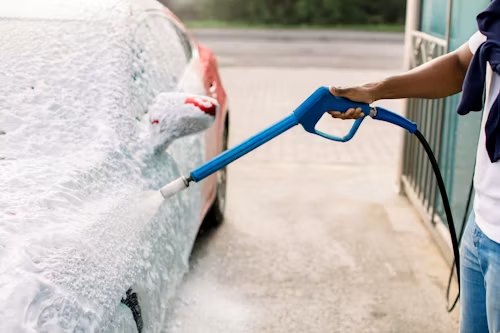
Surface Cleaner Vs Spray Wand: The Core Difference
A pressure washer wand releases water through a single nozzle pattern. The user controls the angle, distance, and movement by hand. This works well for detail cleaning, but it can be difficult to keep the spray distance even across a wide driveway.
A surface cleaner keeps the nozzles contained under a deck, usually with a rotating spray bar. The real difference in pressure washer surface cleaner vs standard spray wand performance comes from how evenly each tool maintains spray distance across flat surfaces.
Cleaning Pattern, Spray Distance, And Surface Contact
A wand creates a narrow cleaning path. If the user moves too close, the surface can become etched or overly bright. If the user pulls back too far, dirt may remain. This uneven control is why many driveways cleaned only with a wand show lines after drying.
A surface cleaner reduces that problem because the deck keeps the spray bar at a more consistent height.
Why Flatwork Cleaning Needs Consistent Coverage?
Driveways, patios, and walkways expose cleaning mistakes more than vertical surfaces. Concrete and pavers show stripes, circular marks, missed patches, and uneven rinse patterns quickly. Consistent coverage is the main reason surface cleaners are popular for flatwork.
Once the basic difference is clear, the next question is which tool produces cleaner-looking results.
Which Tool Cleans Driveways More Evenly?
For most driveways, a surface cleaner produces a more even finish than a wand. The rotating nozzles cover a wider path and reduce the hand-angle errors that often happen with wand cleaning. This is especially useful on large concrete areas where small inconsistencies become obvious.
More even coverage, fewer visible stripes, and less operator fatigue are practical benefits of pressure washer surface cleaner that become obvious on wide concrete areas.
Streak Control On Concrete And Pavers
Streaks usually come from uneven pressure, inconsistent walking speed, or poor overlap. With a wand, the user must control all three at once. A surface cleaner makes this easier because the spray pattern stays enclosed and balanced.
However, a surface cleaner can still leave marks if the pressure washer does not provide enough GPM, the nozzles are clogged, or the user moves too fast.
How Cleaning Speed Changes With Surface Area?
A wand can clean a small stained patch quickly, but it becomes tiring on a full driveway. A surface cleaner covers more ground per pass, which helps reduce cleaning time and repeated corrections.
Here is a simple comparison:
| Cleaning Task | Surface Cleaner | Spray Wand |
| Full driveway | Faster and more even | Slower and more tiring |
| Patio slab | Efficient for open areas | Useful for corners |
| Walkway | Smooth, consistent passes | Good for narrow edges |
| Steps | Usually not ideal | Better control |
| Wall or fence | Not suitable | Best option |
| Oil spot treatment | Good after pretreating | Better for focused rinsing |
When A Spray Wand Still Makes More Sense?
A spray wand is still useful because not every cleaning task is flat, open, or easy to reach. Surface cleaners are designed for horizontal surfaces. They are not ideal for walls, fences, steps, tight edges, narrow corners, or raised borders.
A wand also gives better control when rinsing detergent, removing loose debris, or targeting small stains before using the surface cleaner.
Edges, Corners, Steps, And Vertical Surfaces
Surface cleaners usually cannot reach tight against garage doors, retaining walls, porch steps, or raised borders. These areas need a wand for detail work. A good cleaning routine often uses both tools: the surface cleaner for the main area and the wand for the edges.
This combination gives a cleaner finish without forcing one tool to do everything.
Small Touch-Ups And Spot Cleaning
For a small stain, a wand may be quicker. Pulling out a surface cleaner for one muddy footprint or a narrow strip may be unnecessary. A wand also allows users to adjust spray tips for rinsing, detergent application, and concentrated cleaning.
The upgrade becomes more convincing when the cleaning area gets larger.
When A Surface Cleaner Is Worth The Upgrade?
A surface cleaner is worth considering when the user regularly cleans wide, flat outdoor surfaces. Large driveways, pool decks, patios, sidewalks, and garage floors are the strongest use cases. The wider the surface, the more valuable the cleaner becomes.
Homeowners with wide concrete areas usually care less about compact size and more about best pressure washer surface cleaner for large driveways because wider decks reduce cleaning time.
Large Driveways, Patios, And Walkways
For a single-car driveway, a wand can still work. For a two-car driveway, long walkway, or large patio, the difference becomes more noticeable. A surface cleaner reduces fatigue and helps the finished surface look more uniform.
It also controls splashback better than a wand, which matters near siding, garage doors, outdoor furniture, and landscaped edges.
Frequent Cleaning And Seasonal Maintenance
People who clean outdoor surfaces once every few years may not need a premium attachment. Frequent users benefit more because the time savings add up. A surface cleaner also makes routine maintenance feel less demanding.
For homeowners cleaning patios, walkways, and driveways several times a year, best pressure washer surface cleaner for frequent residential use often matters more than commercial-grade power.
The buying decision should also consider cost and durability.
Cost, Durability, And Long-Term Value
A wand comes with most pressure washers, so it costs nothing extra unless the user buys additional nozzles or extensions. A surface cleaner adds cost, but it can save time and improve results on large flat areas.
A cheaper attachment may work for occasional cleaning, but longevity & long-term value depend on bearing quality, spray bar durability, and replacement nozzle availability.
Residential Vs Commercial Build Quality
Residential surface cleaners usually use lighter housings and are easier to store. Commercial models often have stronger bearings, stainless steel or heavy-duty spray bars, higher PSI ratings, and better repairability. The right choice depends on frequency of use, surface size, and pressure washer power.
A homeowner does not always need a commercial model, but very cheap units may wear faster if used often.
Repairable Parts, Bearings, Nozzles, And Housings
Durability is not just about the deck material. The most important parts are often hidden. Bearings affect spray bar rotation, nozzles affect cleaning pattern, and seals affect pressure stability.
Look for:
- Replaceable nozzles
- Smooth spray bar rotation
- Strong quick-connect fittings
- Stable deck housing
- Clear PSI and GPM ratings
- Available replacement parts
- Easy storage and handling
These details help determine whether the tool remains useful after repeated seasons.
Buying Decision Table: Surface Cleaner Or Wand?
The best choice depends on the cleaning task, surface size, and how often the user pressure washes.
| User Situation | Better Choice | Reason |
| Large driveway | Surface cleaner | Faster, more even coverage |
| Small patio | Either | Depends on budget and storage |
| Steps and corners | Wand | Better precision |
| Frequent home cleaning | Surface cleaner | Saves effort over time |
| One-time cleaning | Wand | No extra attachment cost |
| Professional flatwork | Surface cleaner | Better productivity |
| Detail rinsing | Wand | More control |
The most practical choice depends on the size and shape of the area being cleaned. Surface cleaners handle broad, flat sections efficiently, while spray wands remain useful for detailed areas that require greater control.
FAQs About Pressure Washer Surface Cleaner Vs Wand
These frequently asked questions address cleaning speed, water use, concrete performance, smaller patios, and professional use when comparing a pressure washer surface cleaner with a standard spray wand.
Is a surface cleaner faster than a wand?
Yes. A surface cleaner is usually faster on large flat areas because it covers a wider path and reduces repeated passes caused by streaks.
Does a surface cleaner use less water?
Sometimes. It may reduce total cleaning time, which can lower water use. Actual water consumption depends on the pressure washer’s GPM and cleaning duration.
Can a wand clean concrete just as well?
Yes, but it takes more skill and time. A wand can clean concrete well, but uneven distance and speed often create visible lines.
Is a surface cleaner worth it for a small patio?
Sometimes. It is worth it if the patio is cleaned often. For rare cleaning or very tight spaces, a wand may be enough.
Do professionals use surface cleaners?
Yes. Professionals commonly use surface cleaners for driveways, sidewalks, and commercial flatwork because they improve speed, consistency, and productivity.
These differences make it easier to decide which tool fits a particular cleaning job. For many homeowners, keeping both available provides efficient flat-surface cleaning without giving up the precision needed for edges, steps, and detailed rinsing.
Final Verdict
A pressure washer surface cleaner is usually better than a wand for large driveways, patios, and walkways because it cleans more evenly with less fatigue. A wand still matters for edges, steps, vertical surfaces, and detail rinsing. For most homeowners, the best setup is using both tools together for cleaner, faster, and more controlled results.