
A hori hori knife for weeding, digging, and planting is a multi-purpose garden blade designed to cut, scoop, loosen, measure, and pry in soil. It matters because many gardening jobs require both digging strength and cutting control.
This article explains where a hori hori knife performs best, how to use it for common garden tasks, and which features matter when soil, roots, and long work sessions make ordinary hand tools feel limited.
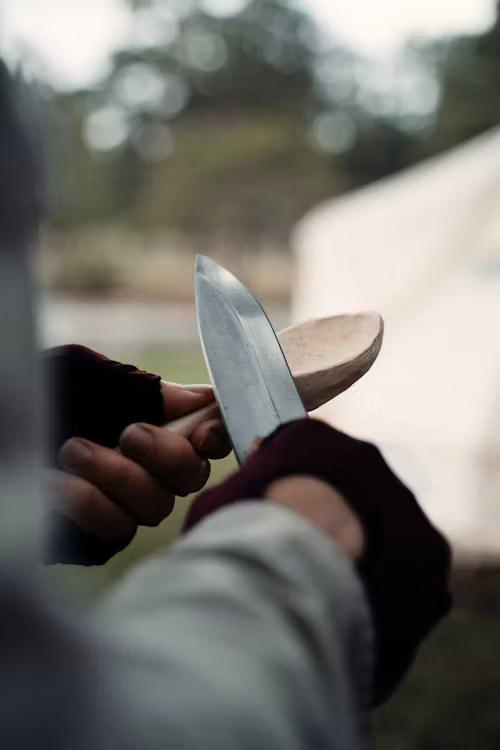
Why A Hori Hori Knife Works For Multiple Gardening Tasks?
A hori hori knife works well because its shape combines several tool functions in one blade. The pointed tip enters soil easily, the concave blade can scoop small amounts of dirt, and the sharpened or serrated edge helps cut roots, stems, weeds, and tough garden debris.
Unlike a standard trowel, it does not only move soil. Unlike a pruning knife, it does not only cut. Its strength comes from handling small, mixed tasks where gardeners need to dig, slice, lift, and measure without changing tools repeatedly.
| Feature | Practical Benefit | Common Garden Use |
| Pointed blade tip | Enters soil with control | Digging holes and loosening roots |
| Serrated edge | Cuts fibrous material | Roots, weeds, and plant clumps |
| Concave blade | Scoops narrow soil areas | Planting and transplanting |
| Depth markings | Measures planting depth | Bulbs, seedlings, and seeds |
| Full-tang design | Improves strength | Tough soil and prying work |
This versatility is why many gardeners keep a hori hori knife nearby for raised beds, vegetable gardens, flower borders, and tight planting spaces.
Using A Hori Hori Knife For Weeding
A hori hori knife is especially useful for weeds with deeper roots. Instead of pulling from the top and snapping the root underground, the blade can be pushed beside the root to loosen the surrounding soil. Once the soil opens, the weed can usually be lifted more cleanly.
For taproot weeds such as dandelions, insert the blade vertically beside the root, press downward, and gently rock the handle away from the plant. The goal is not to chop the root immediately. It is to loosen enough soil so the root comes out with less breakage.
Deep-rooted weeds put real pressure on the blade, which is why best heavy-duty hori hori knife choices usually matter more for gardeners dealing with stubborn crowns and woody roots.
For weeds growing between desirable plants, use the pointed tip carefully. Work slowly around the weed crown and avoid slicing sideways until you know where the nearby plant roots are.
Using A Hori Hori Knife For Digging And Soil Work
A hori hori knife can dig small holes, loosen packed soil, and create narrow planting spaces with more control than a wide trowel. It is not meant for moving large amounts of soil, but it performs well when the job requires accuracy.
In loose soil, push the blade down and pull soil back in small scoops. In firmer soil, insert the tip at a slight angle and rock the blade gently. Avoid forcing the knife straight down into dry clay or rocky ground because the tool can slip or strain your wrist.
Clay-heavy beds can make ordinary hand tools feel weak, so best hori hori knife for tough soil often depends on blade thickness, tang strength, and grip stability.
For compact garden beds, it helps to work in layers. Loosen the top few inches first, remove debris, and then deepen the hole gradually. This protects the blade and gives the gardener better control.
Using A Hori Hori Knife For Planting And Transplanting
Planting is one of the most practical uses for a hori hori knife. The blade can create narrow holes for seedlings, herbs, bulbs, and small perennials without disturbing more soil than necessary.
Depth markings are helpful when planting bulbs or seedlings that need consistent placement. Push the blade into the soil to the desired depth, open the hole slightly, place the plant or bulb, and firm the soil back around it.
Transplanting becomes easier when the grip stays stable during twisting motions, which is why best ergonomic handle hori hori knife options can reduce hand fatigue and improve control.
When transplanting, use the blade to loosen the soil around the root zone before lifting the plant. Do not cut directly under the plant too aggressively. A slow circular motion around the root ball usually causes less damage than one deep cut.
Hori Hori Knife Features That Matter For Demanding Gardeners
Gardeners who use a hori hori knife often need more than sharpness. Blade construction, handle comfort, sheath quality, and balance all affect how useful the tool feels after repeated use.
A strong blade should not flex too much during digging. A comfortable handle should stay secure when hands are damp or muddy. A reliable sheath matters because a hori hori knife is sharp enough to require safe storage between tasks.
Look for these practical features:
- Full-tang or reinforced construction
- Stainless steel or well-protected carbon steel
- Clear depth markings
- A serrated edge for roots and fibrous stems
- A handle that does not become slippery when wet
- A sturdy sheath with secure retention
- Balanced weight that does not strain the wrist
Gardeners who spend hours moving between beds often appreciate best hori hori knife for long gardening sessions because handle comfort becomes just as important as cutting strength.
A knife that feels fine for five minutes may feel tiring after a full afternoon of weeding, planting, and dividing plants.
Durability Signs That Matter Over Time
A good hori hori knife should survive repeated soil contact, moisture, root cutting, scraping, and storage without becoming loose, rusty, or uncomfortable. Long-term durability depends on both construction and care.
The blade should be thick enough for regular digging but not so heavy that it feels awkward. The handle should stay firmly attached, with no wobbling after pressure or twisting. The sheath should protect the edge and prevent accidental contact during storage.
A well-built tool should survive repeated digging, scraping, and root cutting, so longevity and long-term value of hori hori knife depends heavily on materials, construction, and care habits.
After each use, remove soil, rinse only when needed, dry the blade fully, and store it in a dry place. Even stainless steel performs better when moisture and sap are not left sitting on the surface.
When A Hori Hori Knife Is Not The Right Tool?
A hori hori knife is versatile, but it should not be treated as a replacement for every garden tool. It is not the safest choice for heavy excavation, thick woody roots, large shrubs, or rocky ground that requires major leverage.
Use another tool when the task involves:
- Large holes for shrubs or trees
- Thick roots that need a saw
- Heavy clay that requires a fork or mattock
- Large-scale soil turning
- Pruning branches above ground
- Prying stones from compact soil
Knowing where the tool performs well—and where a larger or more specialized garden tool is safer—helps gardeners use a hori hori knife effectively without placing unnecessary stress on the blade, handle, or surrounding plants.
FAQs About Hori Hori Knife For Weeding, Digging, And Planting
These frequently asked questions address common concerns about using a hori hori knife for weed removal, clay soil, bulb planting, root protection, and long-term durability.
Is a hori hori knife good for weeding?
Yes. It works well for deep weeds because the blade can loosen soil around the root before pulling, which reduces breakage and makes weed removal cleaner.
Can a hori hori knife dig in clay soil?
Yes, but with care. It can loosen small areas of clay soil, but dry or heavily compacted clay may require a garden fork before detailed knife work.
Can a hori hori knife be used for bulb planting?
Yes. The blade shape and depth markings make it useful for planting bulbs at consistent depths without digging overly wide holes.
Does a hori hori knife damage plant roots?
It can if used carelessly. Slow cuts, shallow angles, and careful soil loosening help protect desirable roots during transplanting and weeding.
How long should a good hori hori knife last?
A good hori hori knife can last for years with proper cleaning, dry storage, and sensible use. Build quality and blade material make a major difference.
Understanding these practical uses and limitations helps gardeners get more consistent performance from a hori hori knife. Proper technique, appropriate soil conditions, routine cleaning, and sensible tool selection can improve control while protecting both the knife and the plants around it.
Final Verdict
A hori hori knife is especially useful for gardeners who regularly weed, dig, plant, transplant, and work in tight soil spaces. Its value comes from combining cutting control, digging ability, and planting accuracy in one practical hand tool.
The best results come from matching the knife to the job. Choose strong construction for tough soil, a comfortable handle for long sessions, and reliable materials for long-term garden use.